
Introduction
Losing a tooth can affect more than your smile. Over time, the jawbone that once supported the tooth may begin to shrink because it no longer receives the same stimulation from chewing. If too much bone is lost, it can become difficult to place a dental implant or support certain types of dental treatment. This is where a bone graft may help.
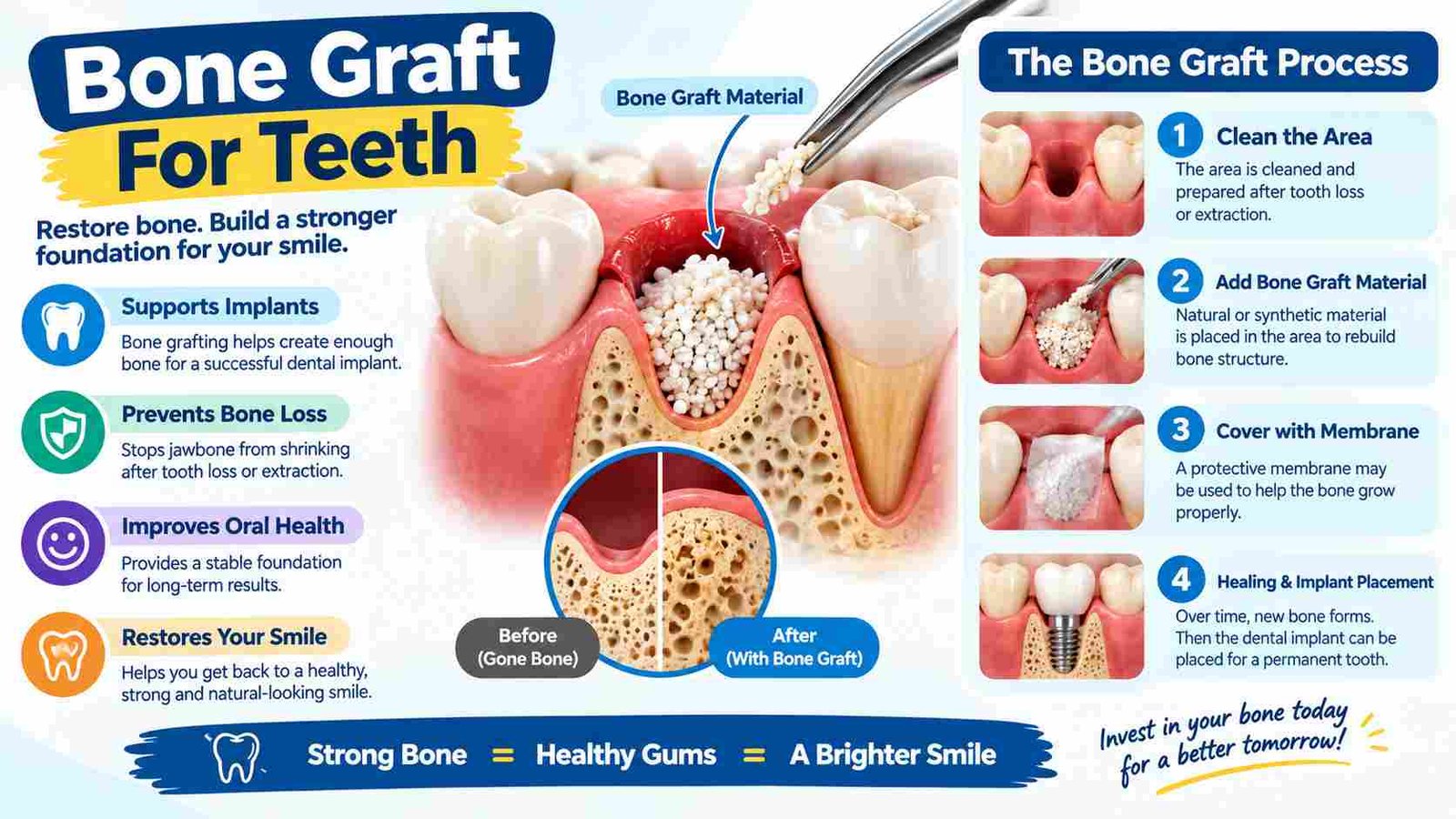
So, what is a bone graft for teeth? A dental bone graft is a procedure that adds bone or a bone-like material to an area where the jawbone has become too thin or has been lost. The material creates a framework that allows new bone to develop over time. It is commonly used after tooth loss or extraction and may be recommended before dental implant treatment.
A bone graft does not replace a missing tooth. Instead, it helps rebuild the foundation underneath the tooth. In this guide, you will learn why bone grafting is needed, how the procedure works, the different types of grafts, recovery time, possible risks, cost factors, and how bone grafting relates to dental implants.
What Is a Bone Graft for Teeth?
A bone graft for teeth is a dental procedure used to rebuild or preserve bone in the jaw. When a tooth is missing, the bone around its former root may gradually become smaller. A graft can add material to this area and provide a structure where the body’s natural bone can grow.
The graft material is not an artificial tooth, and it does not instantly turn into a solid jawbone. Instead, it acts as a scaffold. During healing, the body gradually develops new bone around and through the graft. Over time, the treated area can become stronger and more suitable for dental treatment.
Bone grafting may be performed in the upper or lower jaw. It can be used in an area where a tooth has recently been removed or where bone has been missing for a longer period. The amount and type of graft needed depend on the location and severity of bone loss. One of the most common reasons for a dental bone graft is preparation for an implant. Dental implants need adequate bone for support. If the jawbone is too thin or weak, grafting may help create a better foundation before implant placement.
Why Do You Need a Bone Graft for Teeth?
There are several reasons a dentist may recommend a bone graft. One of the most common is bone loss after tooth extraction. Once a tooth is removed, the jaw no longer receives stimulation from its root. The bone can slowly shrink, changing the shape and volume of the area.
Advanced gum disease can also cause bone loss. Periodontal disease can damage the tissues and bone that support teeth. If the condition becomes severe, there may not be enough healthy bone in certain areas without additional treatment.
Long-term tooth loss is another possible cause. A missing tooth that is not replaced may allow the surrounding jawbone to gradually lose volume. Dental injuries and some infections can also damage the bone.
Bone grafting is particularly important when someone is considering dental implants. An implant is placed into the jawbone, so the dentist needs to make sure the bone can provide adequate support.
Common Reasons for Dental Bone Grafting
| Reason | Why a Graft May Help |
| Tooth extraction | Helps preserve bone volume in the extraction area |
| Missing tooth | Can rebuild bone lost over time |
| Gum disease | May restore areas affected by bone loss |
| Dental implant | Creates or improves a foundation for implant placement |
| Injury | Can help rebuild damaged jawbone |
| Infection | May be considered after damaged tissue and infection are properly treated |
Not everyone with a missing tooth needs a graft. Your dentist may use dental X-rays or 3D imaging to determine how much bone is available and whether grafting is necessary.
What Are the Different Types of Dental Bone Grafts?
Dental bone grafts can be made from different materials. The best choice depends on the amount of bone needed, the treatment location, the planned dental procedure, and your dentist’s recommendation.
Autograft
An autograft uses bone taken from another part of your own body. Because the bone comes from the same person receiving the graft, it can provide natural bone tissue. However, it may require an additional procedure to collect the bone.
Allograft
An allograft uses processed human donor bone. This option avoids taking bone from another part of your body. The material is carefully processed before being used in dental treatment.
Xenograft
A xenograft uses processed bone from an animal source, commonly bovine or porcine material. It primarily works as a framework that supports new bone development.
Alloplast
An alloplast uses synthetic bone-substitute materials. These materials can be useful when a patient or dentist prefers a non-human and non-animal source.
There is no single graft material that is right for every patient. Your dentist or oral surgeon will consider the size and location of the bone defect, your oral health, the planned treatment, and other individual factors before recommending an option.
When Is a Bone Graft Needed After Tooth Extraction?
A bone graft may be recommended after a tooth extraction to help preserve the shape and volume of the jaw. This treatment is sometimes called socket preservation. It involves placing graft material into the space left after the tooth has been removed.
The reason is simple: the jawbone can begin to shrink after extraction. If you are planning to replace the tooth with a dental implant later, preserving as much bone as possible can be helpful. Without enough bone, an implant may be harder to place or may require additional bone-building treatment.
A socket graft can sometimes be performed during the same appointment as the tooth extraction. However, it is not automatically necessary after every extraction. The decision depends on the condition of the socket, the amount of existing bone, whether an implant is planned, and the dentist’s assessment.
If you have recently had a tooth removed, ask your dentist whether preserving the socket would be useful for your future treatment. Planning early can sometimes make later restorative treatment easier.
Do You Need a Bone Graft Before a Dental Implant?
Not everyone who receives a dental implant needs a bone graft. Some people naturally have enough bone in the correct location to support an implant. Others may have experienced enough bone loss that additional treatment is needed first.
Dental implants are inserted into the jawbone. For successful placement, the dentist needs to evaluate the bone’s height, width, and overall condition. If the bone is too thin, short, or weak, a graft may be recommended to improve the foundation.
Dental imaging is an important part of this decision. X-rays or three-dimensional scans can help the dental professional see the amount of bone available and plan treatment more accurately.
In some situations, a small graft can be performed at the same time as implant placement. In other cases, a larger graft needs time to heal before the implant is placed. The waiting period depends on the type and size of the graft and how the area heals.
This is why a bone graft should not be viewed as an automatic step before every implant. It is a treatment used when the existing bone does not provide the foundation needed for the planned restoration.
What Is the Dental Bone Graft Procedure Like?
Before the procedure, your dentist or oral surgeon examines the treatment area and may take dental X-rays or 3D images. This helps determine where the bone is missing and how much graft material may be required.
During the procedure, local anesthesia is normally used to numb the area. Sedation may also be available when appropriate. Once the area is comfortable, the dentist carefully accesses the bone and cleans the treatment site.
The graft material is then placed in the area where bone has been lost. In some cases, a special membrane is placed over the graft. This membrane can help protect the material while healing takes place.The gum tissue is then moved back into position and closed with stitches. The exact procedure varies depending on the size and location of the graft.
Although the procedure itself may not take extremely long, the important part happens afterward. The body needs time to heal and develop new bones. This means a bone graft is not an instant solution. It is a process that prepares the jaw for stronger support over time.
How Long Does a Dental Bone Graft Take to Heal?
The healing time depends on the size and location of the graft, the type of material used, your oral health, and the treatment being planned afterward. The gum tissue may begin healing within the first week or two, but the underlying bone takes much longer to mature.
Some patients may be ready for the next stage of treatment after several months. Larger or more complicated grafts may require additional healing time. Your dentist will monitor the area during follow-up appointments and determine when it is ready.
It is important not to judge the success of a graft simply by how the gum looks from the outside. The new bone needs time to develop underneath the tissue. Your dental professional may use imaging to check the area before moving forward with an implant.
What Is Recovery Like?
Mild swelling, tenderness, bruising, and discomfort can occur after bone grafting. These symptoms generally improve as the area heals. Your dentist will give you specific instructions for cleaning your mouth, eating, taking medications, and protecting the surgical site.
Soft foods are usually easier to manage during the early recovery period. Avoid hard, crunchy, or irritating foods that could disturb the treated area. You should also avoid touching or pressing on the graft with your tongue or fingers.
Smoking and vaping can interfere with healing, so following your dental professional’s instructions about these habits is important. Keep all follow-up appointments so the healing process can be checked.
What Are the Benefits and Risks of a Bone Graft?
The main benefit of a bone graft is that it can restore or preserve the jawbone in an area where bone has been lost. This can create a better foundation for a future dental implant and may help preserve the natural shape of the jaw after tooth loss.
However, bone grafting is still a surgical procedure and can have risks. Possible problems include infection, bleeding, swelling, discomfort, delayed healing, exposure of the graft, or graft failure. Some procedures may also carry risks involving nearby nerves or other structures.A graft does not guarantee that an implant will be possible or successful. Your overall oral health and the condition of the bone are important factors.
Contact your dentist if pain or swelling becomes worse instead of gradually improving, or if you develop fever, unusual drainage, pus, or other concerning symptoms. These signs do not automatically mean that the graft has failed, but they should be checked by a dental professional.
How Much Does a Dental Bone Graft Cost?
The cost of a dental bone graft varies widely because every procedure is different. The amount of bone required, type of graft material, location of the graft, and complexity of the procedure can all affect the final price.
Other factors may include the dentist or oral surgeon’s fees, imaging costs, geographic location, and whether additional procedures are needed. If an implant is also planned, the implant and restoration will usually involve separate costs.Dental insurance coverage also varies. Some plans may provide benefits for certain procedures while others may not cover bone grafting in every situation.
Before treatment, ask for a detailed estimate that explains the graft procedure, materials, imaging, follow-up visits, and any planned implant treatment. This gives you a clearer idea of the total cost instead of looking at the graft price alone.
Frequently Asked Questions
1. What is a bone graft for teeth used for?
A bone graft is used to rebuild or preserve jawbone that has been lost or become too thin. It is commonly used to prepare an area for a dental implant or preserve bone after tooth extraction.
2. Can a bone graft be done at the same time as tooth extraction?
Yes, in some cases. A graft can sometimes be placed immediately after extraction to help preserve the socket. However, the decision depends on the condition of the extraction site and the patient’s treatment plan.
3. Can you get a dental implant without a bone graft?
Yes. If you already have enough healthy bone to support an implant, a bone graft may not be necessary. Dental imaging helps the dentist determine whether additional bone is needed.
4. What foods are best after a bone graft?
Soft foods that require little chewing are generally easier during early recovery. Your dentist will provide specific instructions based on your procedure. Hard, crunchy, or irritating foods may need to be avoided while the area heals.
5. How long after a bone graft can you get an implant?
There is no single waiting period for everyone. Some grafts require several months to heal before implant placement. Your dentist will use the healing progress and dental imaging to decide when the area is ready.
Conclusion
A dental bone graft is a procedure used to rebuild or preserve the jawbone after bone loss. If you were wondering what a bone graft is for teeth, the simplest answer is that it adds graft material to an area where the jawbone needs more support, creating a framework for new bone growth. It is commonly used after tooth extraction and when preparing for dental implants.The type of graft, recovery time, cost, and need for additional treatment depend on your individual situation. Not everyone needs a bone graft, so a dental examination and appropriate imaging are important before making a decision. If your dentist recommends one, ask why it is needed, what type of graft is being used, how long healing may take, and how it fits into your overall dental treatment plan.