
Introduction
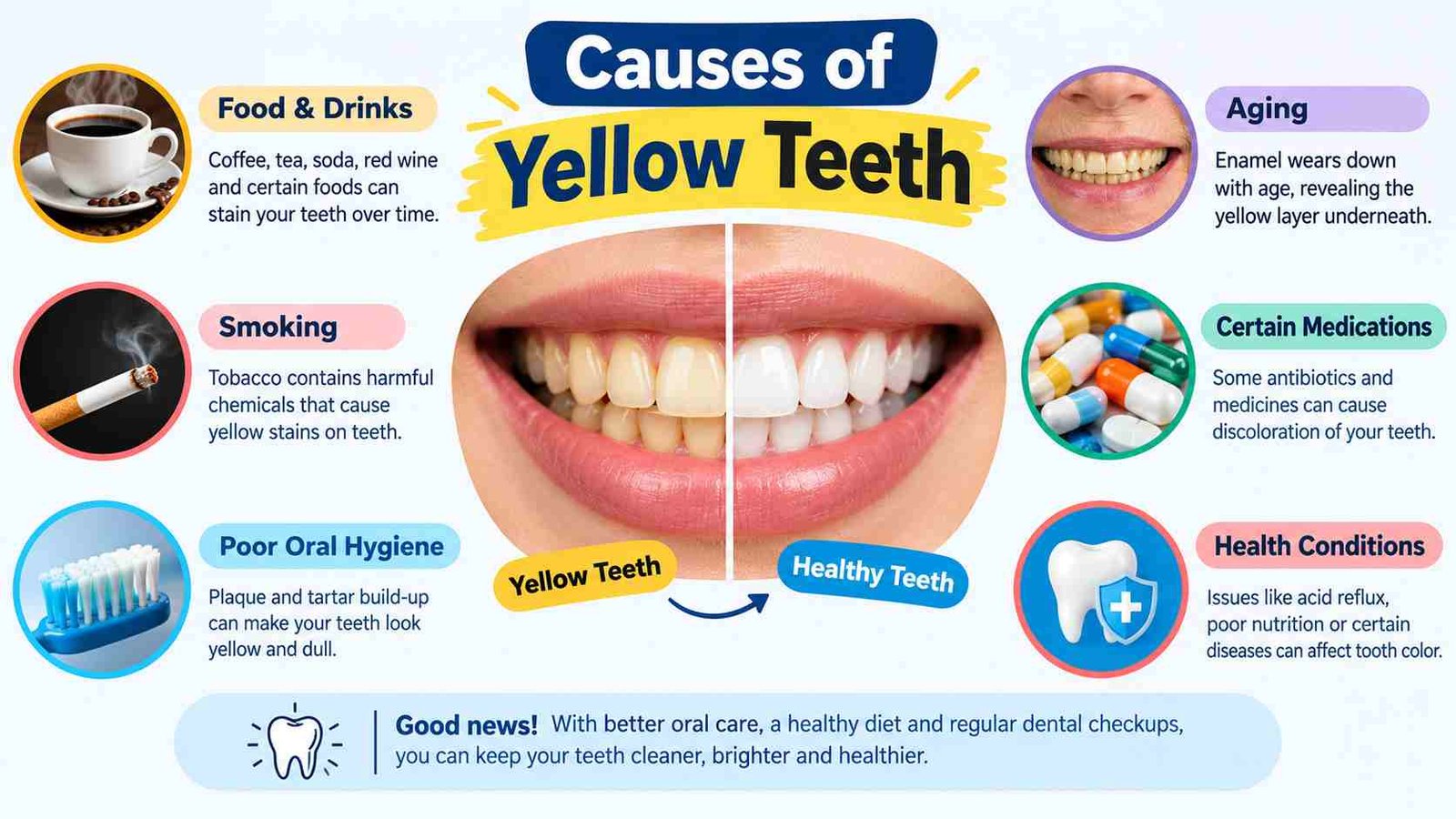
Yellow teeth are a common concern, but they do not always mean that your teeth are unhealthy or that you have poor oral hygiene. So, what causes yellow teeth? The answer can be anything from the foods and drinks you consume to natural changes in your teeth as you age.
Some teeth are naturally more cream-colored or yellow because of the dentin underneath the enamel. Other teeth become yellow because of coffee, tea, tobacco, plaque, tartar, certain medications, enamel erosion, or dental conditions. The type of discoloration also matters. Some stains develop on the outside of the tooth, while others occur inside the tooth structure.
Understanding the cause can help you choose the right solution. A professional cleaning may be enough for plaque or tartar, while deeper discoloration may need professional whitening or another cosmetic treatment. The good news is that many causes of yellow teeth can be managed with good dental care and healthy daily habits.
Are Yellow Teeth Normal?
Bright white teeth are often shown in advertisements, but naturally healthy teeth are not always pure white. Many people naturally have teeth that are ivory, cream, or slightly yellow. This is largely because of the natural structure of a tooth.
The outer layer of a tooth is called enamel. Although enamel is very hard, it is somewhat translucent. Underneath it is dentin, which naturally has a yellowish color. When enamel is thick, it can hide some of this color. When enamel becomes thinner, more of the underlying dentin becomes visible, making teeth appear more yellow. This means that yellow teeth are not automatically a sign of poor brushing or an unhealthy mouth. Two people can have equally good oral hygiene but naturally different tooth shades. Genetics, enamel thickness, and dentin color all play a role.
However, a noticeable change in tooth color can sometimes point to an external stain or dental problem. If your teeth have recently become much darker, or if only one tooth has changed color, it is worth paying attention to the change.
What Causes Yellow Teeth?
There are several possible answers to what causes yellow teeth, and more than one factor can affect your smile at the same time. Some causes create stains on the surface, while others change the appearance of the tooth from within.
Surface Stains From Food and Drinks
What you eat and drink can have a major effect on tooth color. Coffee, tea, red wine, cola, berries, curry, tomato-based foods, soy sauce, and other strongly colored foods contain pigments that can attach to the enamel. Repeated exposure can gradually make teeth look yellow or darker.
Coffee and tea are especially common sources of staining because many people consume them regularly. The problem is usually not one cup or one meal. Frequent exposure over months or years can allow stains to build up.
Acidic drinks can also contribute indirectly. When acids weaken or wear down enamel, the yellowish dentin underneath may become more visible. This can make the teeth look less bright even when there is not a heavy surface stain.
Poor Oral Hygiene and Plaque Buildup
Plaque is a sticky film that forms on teeth when bacteria, food particles, and saliva mix. If plaque is not removed regularly, it can make teeth look dull or yellow.
Over time, plaque can harden into tartar, also called calculus. Tartar can have a yellow or brown appearance and commonly develops near the gumline or between teeth. Unlike soft plaque, hardened tartar cannot usually be removed with normal brushing at home.
Regular brushing and cleaning between teeth can help control plaque. Professional dental cleanings are important when tartar has already formed.
Aging and Natural Enamel Thinning
Age is another common reason teeth become more yellow. Enamel naturally changes over time, and years of chewing, eating, drinking, and normal wear can gradually affect its appearance.
As enamel becomes thinner, the naturally yellow dentin underneath becomes easier to see. At the same time, years of exposure to coffee, tea, tobacco, and colored foods can leave surface stains.
This means age-related yellowing can result from both natural changes inside the tooth and external staining. It does not necessarily mean that someone has neglected their oral hygiene.
Tobacco and Smoking
Tobacco is another major contributor to yellow or brown teeth. Cigarettes, cigars, and chewing tobacco can leave substances on the teeth that become noticeable over time.
People who use tobacco regularly may develop persistent staining that is difficult to remove with ordinary toothpaste. Tobacco can also affect the health of the gums and increase the risk of other oral health problems.
Stopping tobacco use can help prevent further staining and is beneficial for overall oral health. If existing stains are a concern, a dentist can determine whether professional cleaning or whitening may help.
Genetics and Natural Tooth Color
Genetics can influence the natural color and appearance of your teeth. Some people naturally have thinner or more translucent enamel, allowing more dentin color to show through. The natural color of dentin can also vary between individuals.
This explains why a person can brush and floss regularly and still have teeth that look slightly yellow. Tooth color is not determined by hygiene alone.
Trying to make naturally cream-colored teeth extremely white is not always necessary. A healthy smile does not have to look like a bright-white cosmetic advertisement.
Enamel Erosion and Enamel Damage
Enamel erosion can make teeth appear more yellow because it reduces the thickness of the protective outer layer. Acidic foods and drinks, frequent soda consumption, acid reflux, aggressive brushing, teeth grinding, and normal wear can all contribute to enamel damage.
When enamel becomes thinner, the yellowish dentin underneath becomes more visible. This is one reason some people notice increasing yellowing even though they have maintained good brushing habits.
Protecting enamel is therefore an important part of maintaining the natural appearance of your teeth. Avoid brushing too aggressively, limit frequent exposure to acidic drinks, and discuss persistent acid exposure or grinding with your dentist.
Certain Medications
Some medications can cause tooth discoloration, particularly when teeth are developing. Tetracycline and doxycycline are examples associated with internal tooth discoloration under certain circumstances. Some other medications can also affect tooth color.
Long-term use of chlorhexidine mouthwash may contribute to external staining in some people. Medication-related discoloration can be different from ordinary food stains and may be harder to remove.
If you believe a medication has changed your tooth color, do not stop taking it without speaking with your healthcare professional. Instead, ask your dentist about appropriate options for managing the discoloration.
Dental Fluorosis
Dental fluorosis occurs when excessive fluoride exposure affects developing teeth. Depending on its severity, it can produce changes ranging from white areas to yellow or brown discoloration.
Unlike a simple coffee stain, fluorosis develops while the teeth are forming. This means ordinary brushing cannot simply remove the affected areas.The appearance and treatment of fluorosis can vary. A dentist can examine the teeth and determine whether the discoloration is related to fluorosis or another condition.
Tooth Trauma or Injury
An injury to a tooth can sometimes cause it to change color. Trauma may affect the pulp or other internal structures of the tooth, leading to discoloration.
One tooth that suddenly becomes yellow, gray, brown, or dark is different from teeth that have gradually become yellow overall. A localized color change can sometimes indicate an issue inside that particular tooth.If discoloration develops after an accident, fall, sports injury, or other impact, it is a good idea to have the tooth checked by a dentist rather than simply trying to whiten it at home.
Tooth Decay
Tooth decay can also cause changes in tooth color. A damaged area may appear yellow, brown, or darker than the surrounding enamel. Discoloration associated with decay may occur alongside sensitivity, pain, visible damage, holes, or other symptoms.Not every yellow area is decayed. However, a new spot that looks different from the rest of the tooth should not automatically be treated as a stain.
If you notice discoloration together with pain, sensitivity, a visible hole, or persistent bad breath, schedule a dental examination. Treating the underlying dental problem is more important than simply improving the tooth’s color.
Dental Treatments and Dental Materials
Previous dental treatment can also affect the appearance of a tooth. Root canal-treated teeth can sometimes become darker, while certain older dental materials may appear gray or darker than natural enamel.
It is also important to understand that whitening products primarily affect natural tooth structure. Crowns, veneers, fillings, and other restorations do not necessarily whiten in the same way as natural teeth.This is why a dentist should assess your smile before significant whitening, especially if you have several restorations in visible areas.
Surface Stains vs. Internal Tooth Discoloration
Understanding the difference between surface and internal discoloration makes it easier to understand what causes yellow teeth and why some whitening methods work better for certain people.
| Type of discoloration | Where it occurs | Common causes | Typical approach |
| Extrinsic | Outside of the tooth | Coffee, tea, tobacco, plaque, foods | Cleaning and whitening |
| Intrinsic | Within the tooth | Aging, trauma, medications, fluorosis, genetics | Professional assessment and specialized treatment |
| Combination | Both areas | Multiple factors | May require more than one approach |
What Are Extrinsic Stains?
Extrinsic stains develop on the outside of the tooth. Coffee, tea, tobacco, strongly colored foods, plaque, and tartar are common contributors. Because these stains are on the surface, professional cleaning and appropriate whitening may be effective.
What Are Intrinsic Stains?
Intrinsic discoloration develops within the tooth structure. Aging, medications, fluorosis, trauma, genetics, and certain dental conditions can contribute. These stains may be more difficult to change because they are not simply sitting on the enamel surface.
Can Teeth Have Both Types?
Yes. A person can have naturally yellow dentin while also having surface stains from coffee or tea. This is one reason brushing alone may not produce the bright-white appearance someone expects.
Why Are My Teeth Yellow Even Though I Brush Every Day?
If your teeth are yellow despite regular brushing, it does not necessarily mean that you are doing something wrong. Brushing is important for removing plaque and controlling surface buildup, but it cannot change the natural color of dentin underneath the enamel.
Genetics, natural dentin color, thin enamel, aging, and internal discoloration can all make teeth appear yellow. Coffee, tea, tobacco, plaque, tartar, medications, fluorosis, and previous dental trauma can also play a role.
Another important factor is how you brush. Brushing harder does not necessarily make teeth whiter. In fact, overly aggressive brushing can contribute to enamel wear, which may make the yellowish dentin more visible.
If your teeth are clean but still naturally cream-colored, whitening may change their shade, but it will not turn them into a completely different type of tooth. A dentist can help determine whether the color comes mainly from surface stains, natural tooth structure, or another cause.
Why Do Teeth Become More Yellow With Age?
Teeth commonly become more yellow as people get older. One reason is the gradual thinning of enamel. Because enamel is somewhat translucent, thinner enamel allows more of the yellowish dentin underneath to show through.
Age also means that teeth have had many more years of exposure to staining foods, drinks, tobacco, and normal daily wear. These factors can combine with natural changes in tooth structure and make the smile appear darker or more yellow.
This type of yellowing is not automatically a sign of poor oral hygiene. Someone can maintain excellent brushing and flossing habits throughout life and still experience changes in tooth color.
Good oral hygiene remains important because it helps prevent plaque, tartar, cavities, and gum disease. However, healthy teeth do not have to remain the exact same shade throughout adulthood.
Foods and Drinks That Can Make Teeth Yellow
Certain foods and drinks are more likely to stain teeth because they contain strong pigments. Common examples include coffee, tea, red wine, cola, dark fruit juices, berries, curry, tomato sauce, balsamic vinegar, and dark sauces.
The frequency of exposure matters. Drinking coffee occasionally is different from sipping it throughout the day. Repeated contact gives pigments more opportunities to remain on the tooth surface.
You do not necessarily need to eliminate every food or drink you enjoy. Rinsing your mouth with water after consuming staining foods or drinks can help wash away some residue. Maintaining good brushing and interdental cleaning habits is also important.
For acidic drinks, reducing frequent exposure is particularly helpful because acids can affect enamel. Using a straw for some drinks may reduce contact with front teeth, but it does not replace good oral hygiene.
Can Poor Oral Hygiene Cause Yellow Teeth?
Yes, poor oral hygiene can contribute to yellow-looking teeth, mainly because plaque and tartar can build up on the tooth surface. Plaque is soft and can generally be removed through regular brushing and cleaning between teeth. If it remains on the teeth, it can harden into tartar.
Tartar often develops around the gumline and may look yellow or brown. Once it becomes hardened, brushing alone usually cannot remove it. A professional dental cleaning may be needed.
Food particles and staining can also become more noticeable when teeth are not cleaned regularly. However, it is important not to assume that every person with yellow teeth has poor oral hygiene. Natural dentin color, genetics, aging, enamel thickness, medications, and other factors can all affect tooth color.The goal should be healthy teeth and gums first, rather than chasing an unnaturally white shade.
How to Prevent Yellow Teeth?
Preventing yellow teeth starts with consistent oral care. Brush your teeth at least twice a day using fluoride toothpaste, and use gentle pressure rather than scrubbing aggressively. Strong brushing does not remove intrinsic discoloration and may contribute to enamel wear.
Cleaning between your teeth is equally important because toothbrush bristles cannot effectively reach every space. Floss or use another suitable interdental cleaning method to reduce plaque buildup.
Your diet also matters. You can reduce frequent exposure to coffee, tea, cola, red wine, and strongly pigmented foods if staining is a concern. After consuming them, rinsing your mouth with water can help remove some residue.
Avoiding tobacco is another important step because smoking and other tobacco products can cause persistent staining. Regular dental visits can also help identify tartar, enamel problems, decay, and other causes of discoloration before they become more serious.
How to Get Rid of Yellow Teeth?
The best way to get rid of yellow teeth depends on why they became yellow in the first place. A professional dental cleaning can help when plaque, tartar, or some surface stains are responsible. Removing these deposits may make the teeth look noticeably cleaner without bleaching them.
Whitening toothpaste can help reduce certain surface stains, but it does not change the natural color of dentin. It is therefore less useful for deep internal discoloration.
At-home whitening products, including strips, gels, and dentist-supervised take-home trays, may help with appropriate types of discoloration. Professional in-office whitening is another option and can provide faster results under dental supervision.
For discoloration that does not respond well to whitening, a dentist may discuss cosmetic treatments such as bonding or veneers. These treatments cover the visible tooth surface rather than simply removing a stain.
Does Whitening Work on All Yellow Teeth?
No. Whitening does not work equally well on every type of yellow discoloration. Surface stains from foods, drinks, tobacco, and plaque may respond relatively well to cleaning and whitening.
Natural dentin color is different. Whitening can lighten natural teeth, but brushing cannot remove the yellow color of dentin. Some intrinsic stains, including certain medication-related discoloration and fluorosis, can also be more difficult to treat.
Existing dental work creates another limitation. Crowns, veneers, and fillings generally do not whiten in the same way as natural teeth. If you whiten natural teeth around an existing restoration, the shade difference can sometimes become more noticeable.For this reason, it is better to identify the cause of discoloration before choosing a whitening treatment.
What Home Remedies Should You Avoid for Yellow Teeth?
Many DIY teeth-whitening methods are promoted online, but natural does not always mean safe for enamel. Lemon juice and other acidic substances can expose teeth to unnecessary acid. Frequent or excessive use of abrasive substances can also wear the enamel surface.
Baking soda can be found in some legitimate oral-care products, but repeatedly scrubbing teeth with homemade mixtures is not the same as using a professionally formulated toothpaste. Activated charcoal products are also promoted for whitening, but aggressive or excessive use may be abrasive.Another concern is overusing whitening products. More whitening is not necessarily better. Excessive use can increase tooth sensitivity and irritate the gums.
The goal should be to remove stains without damaging healthy tooth structure. If you are unsure which whitening method is appropriate, a dental professional can identify the cause of the discoloration and recommend a safer approach.
When Should You See a Dentist About Yellow Teeth?
Not every change in tooth color requires urgent care, but some changes deserve professional attention. A sudden color change in one tooth is particularly important because it may be related to trauma or an issue inside the tooth.
You should also arrange a dental examination if yellowing occurs with pain, increasing sensitivity, swollen or bleeding gums, persistent bad breath, visible holes, or other signs of damage. Rapid or unexplained discoloration should also be checked.
A dentist can examine the tooth rather than guessing whether the color is caused by a stain, tartar, enamel change, decay, trauma, or another condition. This is especially important before attempting aggressive whitening.If the discoloration is simply your natural tooth shade, your dentist can also reassure you that the teeth are healthy and discuss cosmetic options if you want a brighter smile.
Frequently Asked Questions
1. What causes yellow teeth even when you brush regularly?
Natural dentin, genetics, enamel thickness, aging, food and drink stains, tobacco, medications, fluorosis and previous tooth trauma can all affect tooth color. Brushing mainly controls plaque and surface deposits, so it cannot remove every type of discoloration.
2. Are yellow teeth unhealthy?
Not necessarily. Naturally cream or slightly yellow teeth can be completely healthy. However, new discoloration, particularly when combined with pain, sensitivity, damage, or other symptoms, should be evaluated by a dentist.
3. Does coffee cause yellow teeth?
Regular coffee consumption can contribute to surface staining. The effect can become more noticeable with frequent exposure over time, especially when combined with other staining habits.
4. Can yellow teeth become white again?
Often, yes, but the result depends on the cause. Surface stains may improve with professional cleaning or whitening, while intrinsic discoloration may require a different cosmetic approach. Not every type of discoloration can be completely removed.
5. Why are my teeth yellow near the gums?
Yellowing near the gums may be caused by plaque or tartar buildup, but the natural shape and color of the tooth can also affect this area. If the discoloration is new, thick, or accompanied by gum bleeding or swelling, a dental examination is recommended.
Conclusion
Understanding what causes yellow teeth is the first step toward choosing the right solution. Yellowing can come from everyday habits such as drinking coffee or tea, using tobacco, or allowing plaque and tartar to build up. It can also happen naturally as enamel becomes thinner with age and the yellowish dentin underneath becomes more visible. Genetics, medications, fluorosis, enamel damage, tooth trauma and decay can also affect tooth color.Not every yellow tooth needs whitening, and brushing harder will not necessarily make naturally yellow teeth white. If discoloration is sudden, affects only one tooth, or occurs with pain or other symptoms, see a dentist for an evaluation. Once the cause is clear, you can choose the safest and most effective way to improve your smile.