
Introduction
Choosing a dental crown is not simply about picking the most attractive material. The right crown needs to protect the tooth, withstand chewing pressure, fit comfortably and match the surrounding teeth. With so many options available, understanding the types of crowns for teeth can make your conversation with your dentist much easier.
Dental crowns are custom-made restorations placed over damaged or weakened teeth. They can restore a tooth’s shape, strength, function and appearance. Depending on your needs, a crown may be made from porcelain, ceramic, zirconia, metal, gold alloy, porcelain-fused-to-metal (PFM), lithium disilicate, resin or other materials.
There is no single crown that is best for everyone. A dentist considers the location of the tooth, how much natural tooth remains, your bite, grinding habits, cosmetic goals, oral health, and budget before recommending a material. This guide explains the major crown options, where they are commonly used, their benefits and limitations, and what you can expect from the treatment.
What Is a Dental Crown?
A dental crown is a custom-made restoration that covers a damaged or weakened tooth. It is sometimes called a dental cap because it fits over the remaining visible portion of the tooth. The purpose is to protect the tooth while restoring its normal shape, size, appearance, and chewing function.
Crowns are different from fillings because a filling replaces a portion of damaged tooth structure, while a crown covers much more of the tooth. A crown may be recommended when a tooth has lost too much structure to be reliably restored with a filling alone.
Crowns can also improve the appearance of badly discolored or misshapen teeth. They may be used to restore a tooth after root canal treatment, protect a broken tooth, support certain dental bridges, or cover a dental implant.
The material matters because different crowns have different levels of strength, translucency, durability, and resistance to wear. Your dentist will select a suitable option based on the condition and position of the tooth rather than appearance alone.
When Do You Need a Dental Crown?
A crown is generally considered when a tooth needs more protection or structural support than a filling can provide. One common situation is after a root canal. Once the infected or damaged pulp has been treated, the remaining tooth may need a strong restoration. Back teeth are particularly exposed to chewing forces, so they often require a crown depending on how much tooth structure remains.
Crowns can also restore teeth that are cracked, broken, severely worn, or heavily damaged by decay. If a large filling has left little natural tooth structure around it, a crown may provide additional support.
Some crowns are placed for cosmetic reasons, such as covering a badly discolored or misshapen tooth. Crowns are also used over dental implants and can serve as supporting restorations for some bridges.
However, not every damaged tooth needs a crown. Depending on the problem, a dentist may recommend a filling, inlay, onlay, veneer, or another treatment. The decision depends on the amount of healthy teeth remaining and the overall condition of the tooth.
What Are the Different Types of Crowns for Teeth?
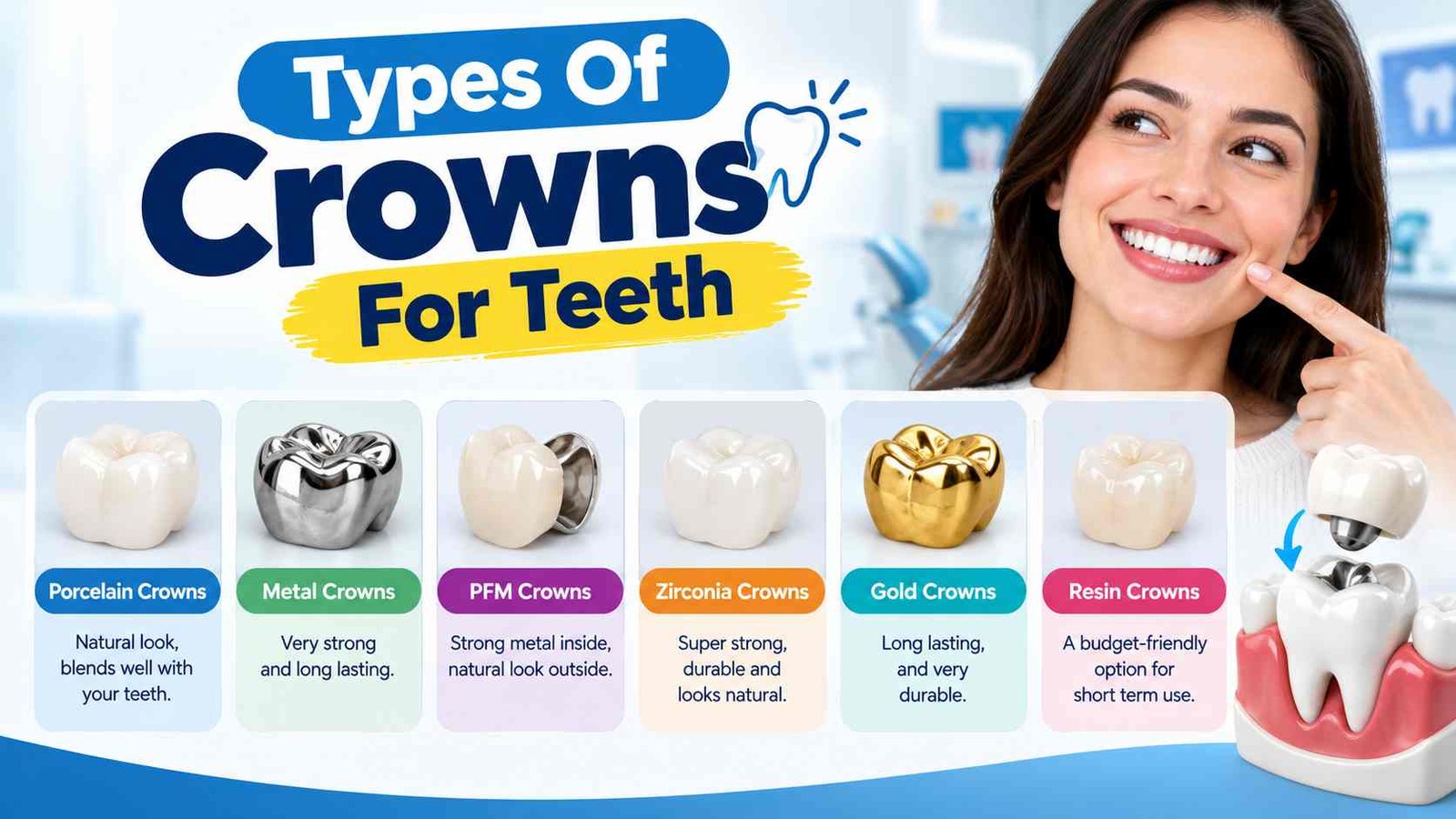
The main types of crowns for teeth differ according to the material used to make them. Some prioritize strength, while others focus more heavily on natural appearance. The most appropriate choice depends on your individual situation.
1. Porcelain Crowns
Porcelain crowns are popular because they can closely resemble natural teeth. Their tooth-colored appearance makes them particularly useful when a crown will be visible when you smile.
Porcelain can reflect light in a way that looks similar to natural enamel, making it an attractive option for many front teeth. However, porcelain can be more brittle than some metal-based options and may chip or fracture under heavy forces.
For this reason, your dentist may consider your bite and tooth position before choosing porcelain. A person who grinds their teeth may need a stronger alternative or additional protection.
2. All-Ceramic Crowns
All-ceramic crowns contain no metal and are designed to provide a natural appearance. They can be an appealing choice for people who want a metal-free restoration, particularly for visible teeth.
Their main advantage is aesthetics. Modern ceramic materials can provide good color matching and translucency. However, not every ceramic crown has the same strength. Different ceramic systems are designed for different clinical situations.
Your dentist may choose an all-ceramic crown when appearance is especially important and the tooth can tolerate the material’s strength characteristics.
3. Zirconia Crowns
Zirconia has become a popular crown material because it combines a tooth-colored appearance with high strength. It is often considered when a tooth needs to tolerate significant chewing pressure.
Zirconia crowns can be made in different forms. Monolithic zirconia is made from a solid block of zirconia, while layered versions may have additional ceramic material added for a more detailed appearance. High-translucency zirconia can provide a more natural look than older zirconia formulations.Zirconia can be used for both front and back teeth, although the exact type selected matters. Its strength makes it particularly useful in areas exposed to heavy biting forces.
Monolithic Zirconia vs. Layered Zirconia
Monolithic zirconia generally emphasizes strength because the crown is made from one solid material. Layered zirconia can offer greater customization and aesthetics but may have different mechanical characteristics.
For molars and patients with strong bite forces, a dentist may prioritize a highly durable zirconia option. For visible teeth, translucency and appearance may receive greater attention.
4. Porcelain-Fused-to-Metal (PFM) Crowns
PFM crowns combine a metal substructure with a porcelain outer layer. This design provides a balance between strength and a tooth-colored appearance.
PFM crowns have been widely used for many years and can work for both front and back teeth. They are stronger than traditional porcelain-only options, although the porcelain layer can still chip. In some cases, metal may become visible near the gum line, particularly if the gums recede or are naturally thin.
PFM may still be a practical option when a dentist wants a combination of durability and reasonable aesthetics. However, newer ceramic and zirconia materials may offer alternatives depending on the patient’s needs.
5. Metal Crowns
Metal crowns are known for strength, durability, and resistance to wear. They are particularly useful for back teeth because these teeth handle substantial chewing forces.
Dental metals can include different alloys rather than a single pure metal. Some restorations may contain gold, palladium, nickel, chromium, or other metals depending on the alloy.
The biggest disadvantage is appearance. A metal crown does not look like a natural tooth, which makes it less appealing for highly visible teeth. However, for a molar that is rarely visible, strength may be more important than matching the exact color of the surrounding teeth.
6. Gold Crowns
Gold crowns are actually made from gold-containing dental alloys rather than pure gold. Other metals are added to create the strength and characteristics needed for dental use.
Gold restorations are highly durable and can be particularly useful on molars. They may also allow conservative preparation because the material can provide strength without requiring as much space as some other crown designs.
Their main disadvantage is color. The gold appearance is noticeable and may not be suitable for someone who wants a completely tooth-colored restoration. Still, gold remains a practical option when long-term function and durability are the priorities.
7. Lithium Disilicate or E.max Crowns
Lithium disilicate is a glass-ceramic material commonly associated with the brand name E.max. It is known for its combination of strength and attractive appearance.
These crowns can provide excellent translucency and color matching, making them popular for visible teeth. They may also be suitable for some premolars and selected back teeth when the clinical situation is appropriate.
Compared with zirconia, lithium disilicate is often chosen when aesthetics and translucency are particularly important. Zirconia may have an advantage when maximum strength is the main concern. The choice should be based on the tooth’s position, bite, remaining structure, and the dentist’s assessment.
8. Resin or Composite Crowns
Resin and composite crowns can provide a tooth-colored appearance and may cost less than some other crown materials. However, they generally do not offer the same long-term durability as stronger ceramic or metal options.
Composite materials can wear, stain, or fracture more readily under heavy use. Resin or acrylic materials are also commonly used for temporary crowns while a permanent restoration is being made.
Because of these limitations, a dentist will consider the purpose and location of the restoration before recommending resin as a long-term option.
9. Pressed Ceramic Crowns
Pressed ceramic crowns are manufactured by pressing ceramic material into a mold to create the crown’s core. Additional porcelain may then be applied to improve its appearance.
These crowns can provide a natural look and are used in situations where aesthetics are important. Their suitability depends on the particular ceramic system, tooth position, bite, and amount of remaining tooth structure.
10. Same-Day or CAD/CAM Crowns
Same-day crowns use digital technology to design and manufacture a restoration, often within the dental office. The dentist can digitally scan the prepared tooth, design the crown using computer software, and mill it from a suitable material.
One advantage is convenience because some patients can receive their permanent crown in a single visit. However, same-day treatment is not appropriate for every case. The tooth, restoration design, available technology, and dentist’s judgment all matter.
Types of Dental Crowns by Tooth Location
The best crown material can change depending on where the tooth is located. Front teeth are highly visible, so appearance, translucency, and color matching are usually major considerations. Porcelain, all-ceramic, lithium disilicate, and certain zirconia crowns may be considered for these teeth.
Back teeth have a different challenge. Premolars and molars experience greater chewing forces, so strength and resistance to fracture become especially important. Zirconia, metal, gold, PFM, and selected ceramic crowns may be appropriate depending on the individual case.
Molars may be particularly challenging for people who grind or clench their teeth. In these situations, the dentist may prioritize a material that can tolerate heavy forces. There is no automatic answer, however, because the patient’s bite, tooth condition, restoration design, and oral habits all influence the final choice.
Types of Dental Crowns Compared
| Crown Type | Appearance | Strength | Common Use |
| Porcelain | Excellent | Moderate | Visible teeth |
| All-ceramic | Excellent | Good | Front teeth |
| Zirconia | Very good | Excellent | Front and back teeth |
| PFM | Good | Very good | Front and back teeth |
| Metal | Low aesthetic match | Excellent | Back teeth |
| Gold | Distinctive | Excellent | Molars |
| E.max | Excellent | Good to very good | Front teeth and premolars |
| Resin | Good | Lower | Temporary or selected cases |
This comparison is a general guide rather than a rule. Modern dental materials vary considerably, and the same material may perform differently depending on its design and placement.
Which Type of Dental Crown Is Best?
There is no single best crown for every patient. If appearance is the main priority, porcelain, all-ceramic, lithium disilicate, and some high-translucency zirconia options can provide highly aesthetic results.If strength is the main concern, zirconia and metal-based crowns may be strong choices. Gold can also be highly durable, particularly for molars.
For front teeth, your dentist may focus more on translucency, shade, and how well the crown blends with neighboring teeth. For molars, bite forces and resistance to wear may receive greater attention.The important point is that the best crown is the one that matches the clinical requirements of your tooth. A dentist should evaluate your tooth and bite before recommending a material.
Factors to Consider When Choosing a Dental Crown
Several factors influence crown selection. The first is the location of the tooth. A front tooth usually has different aesthetic requirements than a molar.
Your bite also matters. If you clench or grind your teeth, a dentist may recommend a material designed to tolerate greater forces. The amount of healthy tooth remaining is another important consideration because the crown needs adequate support.
Your gum health, cosmetic expectations, possible material sensitivities, budget, and expected longevity can also influence the decision. Existing restorations and the condition of neighboring teeth may be considered as well.Rather than choosing a crown based only on price or appearance, discuss the advantages and limitations of each suitable option with your dentist.
Dental Crown Procedure: What to Expect
Getting a crown usually begins with an examination. Your dentist may assess the tooth, gums, bite, and surrounding structures and may take X-rays when necessary.
The tooth is then prepared under local anesthesia. The dentist removes damaged areas and reshapes the tooth so there is enough room for the crown. An impression or digital scan is used to create the restoration.
If the permanent crown is not ready immediately, a temporary crown may protect the prepared tooth. At the final appointment, the dentist removes the temporary crown and checks the permanent restoration’s fit, shape, color, and bite before cementing it in place.The exact process can vary. Some cases require additional treatment, such as gum treatment or root canal therapy, before the final crown is placed.
How Long Do Dental Crowns Last?
Dental crowns can last many years when they are properly fitted and cared for. The Canadian Dental Association notes that crowns can last about 10 years or longer with good care, although actual lifespan varies between patients and restorations.Material is only one part of the equation. Oral hygiene, chewing forces, grinding, crown design, the condition of the underlying tooth, and regular dental care can all affect longevity.
A crown does not make the tooth immune to problems. Decay can still develop around the edges if oral hygiene is poor, and crowns can become damaged from excessive forces or hard objects. If a crown becomes loose, cracked, painful, or uncomfortable, contact your dentist rather than ignoring the problem.
Advantages of Dental Crowns
Dental crowns can restore teeth that have lost significant structure and help return normal chewing function. They can also improve the shape and appearance of damaged or discolored teeth.
For weakened teeth, a properly designed crown can provide protection and support. Crowns can also be used after some root canal treatments, over dental implants, and as part of certain bridge restorations.
Another advantage is the range of materials available. Patients can often choose from different options based on strength, appearance, function, and budget. This allows treatment to be tailored to the individual rather than using one material for every tooth.
Disadvantages and Risks of Dental Crowns
Crowns also have limitations. Preparing a tooth usually requires removing some natural tooth structure to create space for the restoration. Some patients may experience temporary sensitivity after treatment.
A crown can also chip, crack, loosen, or wear over time. If the crown does not fit properly or oral hygiene is poor, bacteria may collect around the restoration and contribute to decay. Material-related reactions are possible but uncommon.
Crowns also do not last forever. Eventually, a crown may need repair or replacement. Good brushing, daily cleaning between the teeth, regular dental visits, and avoiding hard objects can help protect the restoration.
How Much Do Dental Crowns Cost?
The cost of a crown varies widely. Material is one factor, but it is not the only one. The dentist’s fees, laboratory charges, location, tooth position, complexity of treatment, and need for additional procedures can all affect the final price.
For example, a crown requiring extensive preparation or treatment before placement may cost more than a straightforward restoration. Digital scanning and same-day technology can also affect pricing.Insurance coverage varies as well. Before treatment, ask your dental office for a written estimate and check what your dental plan covers.
If you are researching dental crown prices in Pakistan, make sure you compare the material, laboratory quality, dentist’s experience, and what is included in the quoted price rather than comparing the number alone.
How to Care for Dental Crowns?
A crowned tooth still needs daily care. Brush twice a day with fluoride toothpaste and clean between your teeth every day. Pay particular attention to the gumline around the crown.
Avoid chewing ice, pens, or other hard objects. Do not use your teeth to open packages or cut materials. These habits can damage both crowns and natural teeth.
If you grind or clench your teeth, ask your dentist whether additional protection may be appropriate. Regular dental appointments also allow your dentist to check the crown, gums, and underlying tooth.
Dental Crown vs. Veneer: What’s the Difference?
A crown covers the tooth more extensively, while a veneer is a thin restoration designed primarily to cover the front surface of a tooth. Crowns are generally used when a tooth needs substantial restoration or protection, while veneers are often used for selected cosmetic concerns.
Because these treatments serve different purposes, one should not automatically be considered better than the other. Your dentist can determine whether enough healthy tooth structure remains for a conservative cosmetic option or whether greater coverage is needed.
Dental Crown vs. Filling
Fillings are commonly used when a tooth has a smaller or more moderate amount of damage and enough healthy structure remains to support the restoration.A crown provides substantially more coverage and may be considered when a tooth is severely weakened, extensively restored, cracked, or damaged by decay. The goal is to preserve the natural tooth while providing an appropriate level of support.Your dentist will decide between a filling, crown, or another restoration after examining how much healthy tooth structure remains.
Dental Crown Alternatives
A crown is not the only way to restore a damaged tooth. Depending on the situation, alternatives may include fillings, inlays, onlays, veneers, or other restorative treatments.Inlays and onlays can be useful when a tooth needs more restoration than a filling but does not require the extensive coverage of a crown. Veneers may be appropriate for certain cosmetic concerns.If a tooth cannot be predictably restored, extraction followed by a replacement option such as a dental implant may be considered. The best treatment depends on the condition of the tooth, surrounding tissues, and overall oral health.
Frequently Asked Questions
1. What are the different types of crowns for teeth?
Common options include porcelain, all-ceramic, zirconia, porcelain-fused-to-metal, metal, gold alloy, lithium disilicate, resin, pressed ceramic, and CAD/CAM crowns. The appropriate option depends on the tooth and your individual needs.
2. Which crown material looks most like a natural tooth?
Porcelain, all-ceramic, and lithium disilicate crowns can provide very natural-looking results. Certain modern zirconia materials can also offer excellent aesthetics.
3. Are zirconia crowns suitable for front teeth?
Yes. Certain zirconia crowns can be used on front teeth, especially when strength is important. The dentist will consider translucency, shade, tooth position, and your cosmetic expectations.
4. Can a dental crown get a cavity?
The crown itself cannot develop a cavity because it is artificial. However, the natural tooth underneath or around the crown can still develop decay if bacteria accumulate and oral hygiene is inadequate.
5. What should I do if my crown feels loose?
Contact your dentist promptly. A loose crown can expose the underlying tooth to damage or bacteria. Avoid chewing hard foods on that side until you receive professional advice.
Conclusion
The different types of crowns for teeth give patients several ways to restore damaged, weak, broken or unattractive teeth. Porcelain and ceramic options can provide excellent aesthetics, while zirconia, metal, and gold can offer strong performance. PFM and lithium disilicate provide other combinations of appearance and strength.The best choice depends on the tooth’s location, remaining structure, bite, oral health, cosmetic goals, and budget. Instead of choosing a crown based only on material or price, discuss the available options with your dentist. A properly selected and maintained crown can restore function, protect a weakened tooth and help maintain a healthy-looking smile for many years.