
Introduction
If you have noticed small pieces of your teeth breaking off, you may be wondering, why are my teeth chipping? A tooth can chip when its enamel or inner structure becomes weakened or when it is exposed to more pressure than it can handle. Sometimes, a chip happens after biting something hard or having an accident. In other cases, teeth may keep chipping without any obvious reason.
Common causes include teeth grinding, biting hard foods, tooth decay, enamel erosion, acidic foods and drinks, previous dental work, trauma, and uneven pressure from your bite. Some people may also have naturally weaker or thinner enamel.
A small chip is not always a serious problem, especially if it does not cause pain. However, repeated or unexplained chipping should not be ignored. It can sometimes point to an underlying dental issue that needs attention. The right treatment depends on how much of the tooth is damaged, where the chip is located, and what caused it in the first place.
What Does It Mean When Your Teeth Are Chipping?
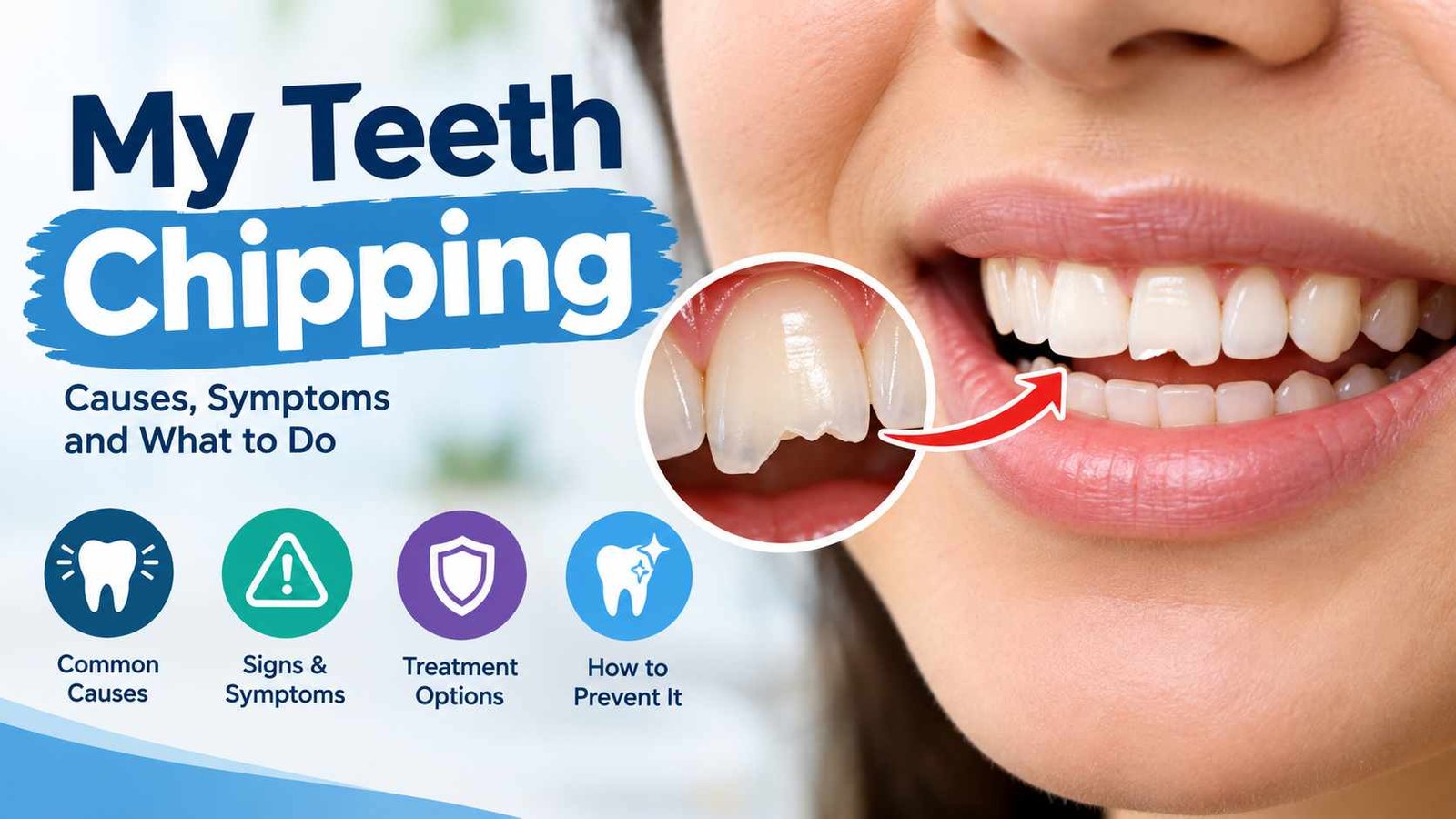
A chipped tooth is a tooth that has lost a small or large piece of its structure. The outer layer, called enamel, is the hard protective covering of the tooth. Under the enamel is dentin, which is softer and more sensitive. If a chip goes deeper, it can expose these inner layers and sometimes affect the nerve or pulp inside the tooth.
A chipped tooth is not exactly the same as a cracked, broken, or worn-down tooth. A chip usually means a piece of the tooth has broken away. A crack is a line or split in the tooth that may extend deeper. A broken tooth can involve a much larger portion of the tooth, while worn teeth gradually lose structure because of repeated pressure, grinding, or erosion.
A tooth can sometimes chip from an activity that does not seem particularly forceful. This is more likely when the tooth has already been weakened by decay, erosion, grinding, an old filling, or another problem. This is why repeated chipping can be a reason to have your teeth checked rather than simply repairing each chip as it appears.
Why Are My Teeth Chipping? Common Causes?
There are several possible answers to why my teeth are chipping, and the cause is not always obvious. In many cases, the problem develops gradually as teeth are exposed to pressure, acid, decay or habits that weaken their structure.
Teeth Grinding and Clenching
Teeth grinding, also called bruxism, can put a surprising amount of pressure on your teeth. Many people grind or clench while sleeping without realizing they are doing it. Over time, this repeated pressure can wear down enamel and contribute to small chips and cracks.
You may notice flattened tooth surfaces, small chips, jaw soreness, morning headaches, or increased tooth sensitivity. If grinding is causing your teeth to chip, repairing the damaged teeth alone may not solve the problem. The grinding itself also needs to be addressed.
Biting Hard Foods
Biting down on ice, hard candy, popcorn kernels, nuts, or other very hard foods can cause a tooth to chip. A healthy tooth may tolerate normal chewing, but sudden pressure in the wrong place can cause damage, especially if the tooth is already weakened.
Using Your Teeth as Tools
Using your teeth to open packages, cut tape, hold objects, bite pens, or even chew your fingernails can place unusual pressure on them. Teeth are designed for biting and chewing food, not for opening or cutting objects. Repeated habits like these can increase the chance of chips.
Tooth Decay and Cavities
A cavity can weaken the structure of a tooth. As decay progresses, it can create a hollow or damaged area that leaves less healthy tooth material to withstand normal chewing forces. As a result, a tooth with untreated decay may chip more easily.
Enamel Erosion
Enamel erosion happens when acids gradually wear away the tooth’s protective surface. Frequent exposure to soft drinks, fruit juices, acidic foods, acid reflux, or repeated vomiting can contribute to enamel loss. As enamel becomes thinner, teeth may become more sensitive and vulnerable to damage.
Large Fillings or Previous Dental Work
A tooth that has a large filling may have less natural tooth structure remaining. Previously treated or damaged teeth can also be more vulnerable to fractures. In some cases, a dentist may recommend a crown to protect a heavily weakened tooth.
Trauma or Accidents
A fall, sports injury, car accident, blow to the face, or unexpected bite can chip a tooth. Trauma can damage even a healthy tooth, and the size of the chip can range from very small to significant.
Normal Wear and Aging
Teeth experience years of chewing pressure. Over time, this can contribute to natural wear. However, repeated chipping should not simply be dismissed as a normal part of getting older. Significant or sudden changes should be evaluated by a dentist.
Bite Problems and Uneven Tooth Pressure
If your teeth do not meet evenly when you bite, certain teeth may receive more pressure than others. Edge-to-edge biting or other uneven contact can contribute to repeated damage. If the same tooth or area keeps chipping, your bite may be one factor worth checking.
Naturally Thin or Poorly Developed Enamel
Some people develop enamel that is thinner or weaker than usual. One example is enamel hypoplasia, which occurs when enamel does not develop normally. This is different from enamel erosion, which happens after the tooth has developed.
Dry Mouth and Other Factors
Saliva helps protect teeth and supports the mouth’s natural defense against acids. A persistently dry mouth can make teeth more vulnerable to enamel damage. Certain medications and health conditions can reduce saliva production, so ongoing dry mouth is another issue worth discussing with a dentist.
Why Do My Teeth Keep Chipping Even When I Am Not Eating Hard Foods?
If you keep asking yourself, why are my teeth chipping when you are not eating hard foods, there may be another cause. Repeated chipping is different from a single accident. When small pieces repeatedly break away, the tooth may already be weakened or exposed to forces that you do not notice.
Teeth grinding is one possibility. You may clench your teeth during sleep and never know it. Enamel erosion is another possibility, particularly if you frequently consume acidic drinks or have acid reflux. Tooth decay can also weaken a tooth from the inside, making it easier for normal chewing pressure to cause a chip.
An uneven bite, a large filling, an older crack, or naturally weaker tooth structure may also play a role. Simply repairing each chip may not stop the problem if the underlying cause remains.
For this reason, repeated chipping is a good reason to schedule a dental examination. A dentist can look at the pattern of damage, examine your bite, check for decay and cracks, and determine whether grinding or another issue could be contributing to the problem.
What Are the Signs That Your Teeth Are Becoming Weak?
Chipping is not always the first sign that something is affecting your teeth. You may notice other changes before a larger piece breaks away. Small flakes, jagged edges, rough surfaces, tiny dents, or flattened areas can indicate that your teeth are experiencing unusual wear or damage.
Increased sensitivity can also be important. If your teeth suddenly become sensitive to cold drinks, hot foods, sweets, or brushing, the protective enamel may have become thinner or damaged. Some people notice that their teeth look shorter over time, especially when grinding or other forms of wear are involved.
Cracks, pain when biting, and repeatedly broken fillings can also deserve attention. Teeth may appear more yellow or darker when enamel becomes thinner because the underlying dentin becomes easier to see.
These signs do not automatically mean that your enamel is permanently damaged. Several different dental conditions can produce similar symptoms. However, a pattern of changes is worth discussing with a dentist, particularly if the changes are getting worse or are happening along with repeated chipping.
Which Teeth Are Most Likely to Chip?
Both front and back teeth can chip, but the circumstances can differ. Front teeth are often exposed to accidental impacts and may also experience pressure from biting habits, nail biting, or using the teeth as tools. Because they are visible, even a small chip on a front tooth can be noticeable.Back teeth, including molars, handle much of the force involved in chewing. They may be affected by hard foods, grinding, cavities, and large fillings. A molar with a large filling may have less natural tooth structure available to handle chewing forces.
Previously damaged teeth can also be more vulnerable. A tooth that has already been cracked, weakened by decay, or heavily restored may chip more easily than an otherwise healthy tooth.
The location of the chip can provide a dentist with useful clues, but it does not identify the cause by itself. For example, a chip on a front tooth could result from trauma, grinding, or a biting habit. A damaged molar could be affected by decay, grinding, a large filling, or hard foods. A dental examination is the best way to determine what is happening.
Can Chipped Teeth Cause Pain or Sensitivity?
A small chip limited to the enamel may not hurt at all. Some people only notice that a tooth feels rough or looks slightly different. However, larger chips can expose the dentin underneath the enamel, which may make the tooth sensitive.
You might feel a sharp response when drinking something cold, eating hot food, or consuming something sweet. Pain when biting can also occur. If the damage reaches deeper parts of the tooth, including the pulp, the pain may be stronger and may require more extensive treatment.A sharp chipped edge can also irritate your tongue, cheek, or gums. Even when there is no pain, it is useful to have a new chip examined if you do not know what caused it.
Do not ignore severe pain, swelling, bleeding, significant sensitivity, or a large piece of missing tooth. These symptoms may indicate more than a minor enamel chip. Prompt dental care can help determine the extent of the damage and reduce the risk of the problem becoming worse.
Is a Chipped Tooth a Sign of a Bigger Dental Problem?
A chipped tooth does not always mean that something is seriously wrong. A healthy tooth can chip during an accident or after biting something unexpectedly hard. However, repeated or unexplained chipping can sometimes be a sign of a larger dental issue.
Tooth decay can weaken the tooth, while enamel erosion can gradually remove its protective surface. Grinding and clenching can expose teeth to repeated pressure. An uneven bite can place extra force on certain teeth, and a previous crack or large filling can leave a tooth more vulnerable.The important question is not only why one chip happened, but whether there is a pattern. If you have several teeth chipping over time, or the same tooth keeps losing small pieces, it is worth finding the underlying cause.
A dentist can assess the tooth and surrounding areas for decay, cracks, wear, bite problems, and other signs of damage. Identifying the cause can help prevent additional chips rather than simply repairing the damage that has already occurred.
How Does a Dentist Find Out Why Your Teeth Are Chipping?
Finding the cause usually starts with a dental examination. Your dentist can examine the tooth surfaces for chips, cracks, cavities, worn areas, and changes in enamel. The location and pattern of the damage can provide useful information.
Your bite may also be checked. If certain teeth contact each other too heavily, repeated pressure could contribute to chipping. Your dentist may also look for signs of grinding, such as flattened surfaces, unusual wear patterns, small cracks, or multiple chips.Dental X-rays may be recommended when the dentist suspects deeper decay, a fracture, or another problem that cannot be seen clearly during a visual examination. However, not every minor chip requires an X-ray.
The goal is to understand both the damage and its cause. This matters because treatment may be different for a chipped tooth caused by an accident compared with one damaged by decay or grinding. Once the underlying issue is identified, your dentist can recommend the most suitable way to protect the tooth and prevent further damage.
How Are Chipped Teeth Treated?
Treatment depends on the size, location, depth, and cause of the chip. A very small chip may need little more than smoothing the rough edge. Polishing can make the tooth feel comfortable and reduce irritation to the tongue or cheek.
For small or moderate cosmetic chips, dental bonding is commonly used. The dentist applies a tooth-colored composite material and shapes it to replace the missing part of the tooth. Fillings may also be suitable for certain damaged back teeth.Veneers may be considered when the main concern is the appearance of a front tooth, but they are not the right choice for every type of damage. If a tooth has lost a large amount of structure or is significantly weakened, a crown may provide more protection.
If a chip or fracture has reached the pulp inside the tooth, root canal treatment may be necessary. A crown may then be used to protect the remaining tooth.The best treatment is not necessarily the most extensive one. Your dentist will consider how much healthy tooth remains and what caused the damage before recommending treatment.
Can You Fix a Chipped Tooth at Home?
A chipped tooth cannot be permanently repaired at home. Until you can see a dentist, the goal is to protect the tooth and avoid making the damage worse.
Try not to chew on the affected side, particularly if the tooth is sensitive or a larger piece has broken away. Softer foods can make eating more comfortable temporarily. Continue keeping your mouth clean, but avoid aggressive brushing around a painful or damaged area.If the chipped edge is sharp and irritating your tongue or cheek, dental wax can temporarily cover it. If a larger piece of the tooth has broken off, keep it and take it with you to the dental appointment.
Do not try to file the tooth yourself. Avoid household glue or other DIY methods to attach a broken piece. These approaches can damage the tooth or surrounding tissues and may make professional treatment more difficult.Home care is only a temporary step. A dentist needs to determine whether the tooth has decay, a deeper crack, exposed dentin, or damage to the pulp.
When Should You See a Dentist for a Chipped Tooth?
A minor chip may not require emergency treatment, but it is still useful to have it assessed, especially when the cause is unclear. You should seek prompt dental care if the tooth is causing severe pain, significant sensitivity, bleeding, swelling, or if a large piece has broken away.A visible crack, a chip caused by an accident, or a tooth that feels loose also deserves prompt attention. Repeated chipping is another important reason to make an appointment because it may point to grinding, decay, erosion, bite problems, or weakened tooth structure.
Even a painless chip can matter. Some dental damage does not cause immediate symptoms, particularly when the damage is limited to the outer enamel. A dentist can determine whether the tooth only needs minor smoothing or whether additional treatment is needed.Getting the problem checked early can also help protect the remaining tooth structure. If the same tooth keeps chipping, treating the underlying cause may be more important than simply repairing the latest chip.
How Can I Prevent My Teeth From Chipping?
Preventing future chips starts with reducing unnecessary pressure on your teeth. Avoid chewing ice, pens, fingernails, and other hard objects. Do not use your teeth to open packages, cut tape, or hold objects that should be handled with your hands.If you play contact sports, a properly fitted mouthguard can help protect your teeth from injury. If you grind or clench your teeth, talk with a dentist about ways to manage the problem. A nightguard may be recommended in appropriate situations.
Reducing frequent acid exposure can also help protect enamel. Try not to constantly sip acidic drinks throughout the day. If you have acid reflux, discuss it with your healthcare professional or dentist rather than ignoring frequent acid exposure.Good oral hygiene remains important. Brush twice a day with fluoride toothpaste, clean between your teeth, and attend regular dental checkups. Treat cavities early because untreated decay can weaken the tooth.
Most importantly, pay attention to repeated changes. If your teeth keep chipping despite avoiding hard foods, do not assume it is simply bad luck. Finding the underlying cause gives you a better chance of preventing additional damage.
Frequently Asked Questions
1. How can I stop my teeth from chipping?
You can reduce the risk of chipping by avoiding hard foods and objects, not using your teeth as tools, treating teeth grinding, and maintaining good oral hygiene. Regular dental checkups can also help find weak or damaged teeth early.
2. Is it normal for teeth to chip as you age?
Teeth can become more vulnerable to wear and damage as you get older, but frequent chipping is not something you should simply consider normal. Repeated chips may be caused by grinding, decay, enamel erosion, or other dental problems.
3. Can chipped teeth be restored?
Yes, most chipped teeth can be restored. Depending on the size and location of the chip, a dentist may use bonding, a filling, a veneer, or a crown to repair the tooth.
4. Why are pieces of my teeth breaking off?
Pieces of teeth can break off because of tooth decay, teeth grinding, enamel erosion, hard foods, an accident, large fillings, or weakened tooth structure. If pieces keep breaking off, see a dentist to find the underlying cause.
5. What illness makes teeth fall out?
Severe gum disease is one of the main conditions that can cause adults to lose teeth. Advanced tooth decay can also destroy a tooth and eventually lead to tooth loss if it is not treated.
6. Can crumbling teeth be fixed?
Often, yes. The treatment depends on how much of the tooth remains and what caused it to crumble. A dentist may use a filling, bonding, crown, root canal treatment, or, in severe cases, recommend removing the tooth.
7. What diseases cause teeth to break?
Tooth decay and severe enamel erosion are common dental problems that can weaken teeth and make them more likely to break. Advanced gum disease mainly affects the tissues supporting teeth and can lead to tooth loss rather than directly causing teeth to break.
8. What rebuilds teeth naturally?
Tooth enamel cannot naturally grow back once a piece has chipped off. However, saliva and fluoride can help strengthen and remineralize areas of enamel that have lost minerals before an actual chip occurs. Good oral hygiene and a balanced diet also support healthy teeth.
9. How much does it cost to fix a chipped tooth?
The cost depends on the type of treatment and the amount of damage. A small chip repaired with dental bonding usually costs less than a veneer or crown. Your dentist can give you an exact estimate after examining the tooth.
Conclusion
If you have been wondering why my teeth are chipping, there can be several explanations. Grinding, hard foods, tooth decay, enamel erosion, trauma, large fillings, uneven bite pressure, and weakened tooth structure can all contribute to chipping.A single small chip does not necessarily mean your teeth are unhealthy. However, repeated or unexplained chipping deserves attention because it may be a sign of an underlying problem. Repairing the damaged area can restore the tooth, but finding and treating the cause can help prevent the same problem from happening again.
 IQnewswire