
Introduction
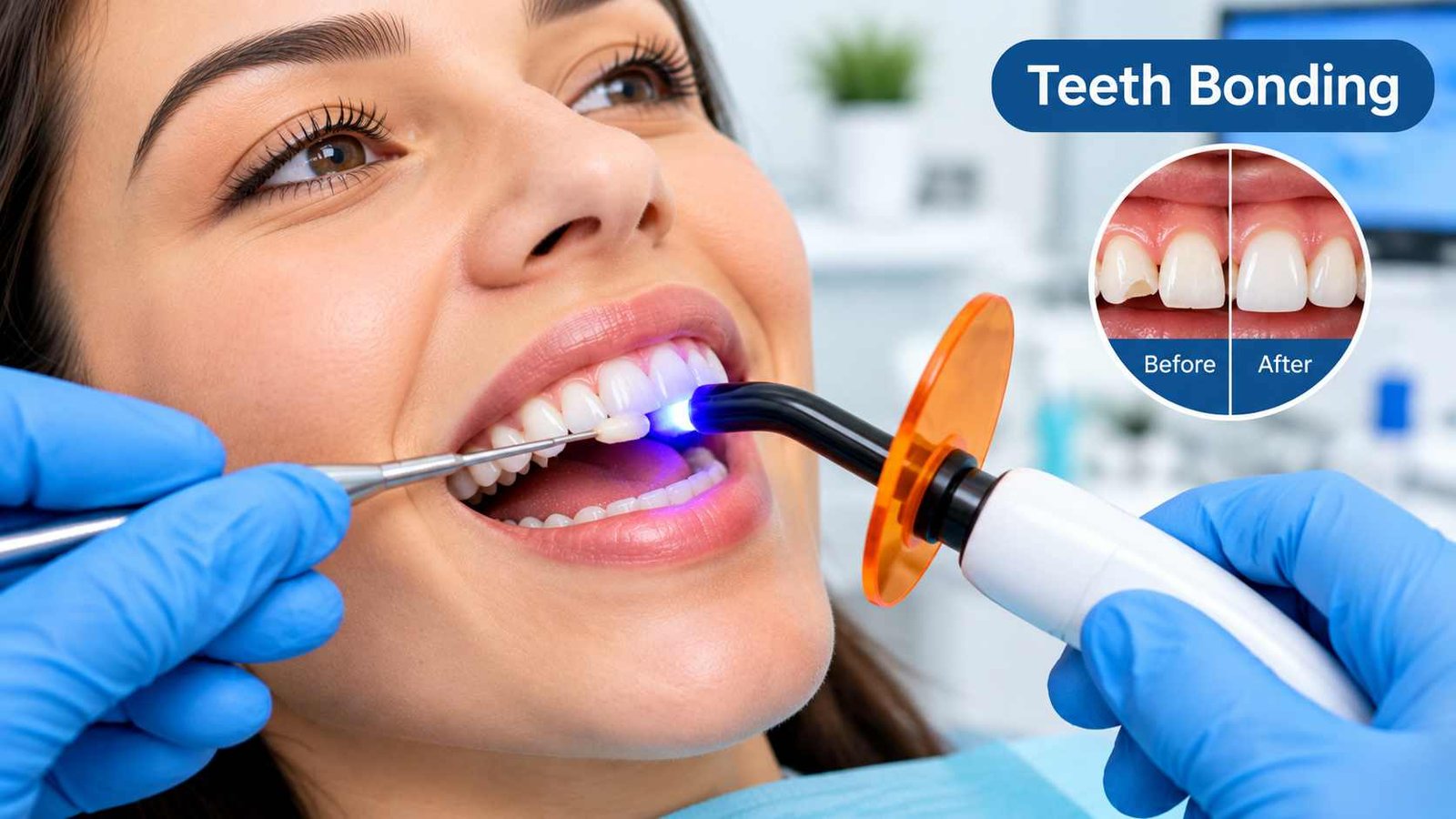
If you have a chipped, uneven, discolored, or slightly gapped tooth, you may have heard about teeth bonding as a simple way to improve your smile. But what is tooth bonding, and how does it actually work? Teeth bonding is a dental treatment that uses a tooth-colored composite resin to repair or improve the appearance of a tooth. A dentist applies the material directly to the tooth, shapes it, and hardens it with a special curing light.
Dental bonding can be used for several minor cosmetic and restorative concerns. It may help repair small chips, close minor gaps, change the shape of uneven teeth, or cover certain types of discoloration. Unlike veneers and crowns, bonding does not usually require extensive preparation of the natural tooth.
The treatment is also relatively quick, and many cases can be completed during one dental appointment. However, bonding is not right for every situation. Its durability, cost, appearance, and lifespan depend on factors such as the tooth being treated, the amount of resin needed, your bite, and your oral habits. This guide explains how teeth bonding works, its benefits and disadvantages, cost, aftercare, and how it compares with other dental treatments.
What Is Teeth Bonding?
Teeth bonding, also called dental bonding, tooth bonding, or composite bonding, is a procedure in which a dentist applies tooth-colored composite resin to a tooth. The resin is carefully shaped to repair damage or change the tooth’s appearance. Once the desired shape is achieved, the dentist uses a curing light to harden the material.
The composite resin is designed to blend with natural teeth. The dentist can select a shade that closely matches the surrounding tooth structure, helping the finished result look natural. Because the material is applied directly to the tooth, bonding can often be completed without removing a large amount of healthy enamel.
Teeth bonding may be used for both cosmetic and restorative purposes. For example, it can improve the appearance of a small chip while also restoring the shape of the tooth. It may also be used to address certain minor tooth-surface problems.One important difference between bonding, veneers, and crowns is how the treatment is made. Bonding material is shaped directly on the tooth, while veneers and crowns are separate restorations made to fit the tooth. This makes bonding a relatively conservative option for suitable cases.
What Is Dental Bonding Used For?
One of the most common reasons people choose dental bonding is to repair a small chipped tooth. A dentist can add composite resin to the damaged edge and shape it so the tooth looks more complete. This can be especially useful for minor chips on visible front teeth.
Bonding can also close some small gaps between teeth. Instead of moving the teeth, the dentist adds a small amount of resin to change their shape and reduce the visible space. However, larger gaps or gaps caused by underlying dental problems may require another treatment. Another use is improving the shape or size of teeth. Bonding can make an uneven tooth appear more balanced or add length to a tooth that looks shorter than the others. It can also help improve the appearance of some misshapen teeth.
In certain cases, bonding can cover areas of discoloration that do not respond well to whitening. The right approach depends on why the tooth is discolored and how severe the discoloration is. Composite resin may also be used to repair minor cracks, worn edges, or certain exposed tooth areas.
How Does Teeth Bonding Work?
The teeth bonding process involves several carefully controlled steps. First, the dentist prepares the tooth surface so the bonding material can adhere properly. A conditioning or etching step may be used as part of this process, followed by a bonding agent.
The dentist then applies the tooth-colored composite resin to the area being treated. The resin starts as a soft, moldable material, allowing the dentist to build up the tooth gradually. This is important because the dentist needs to create a shape that fits naturally with the rest of the smile.
Once the resin is in place, it is shaped and molded. The dentist pays attention to the tooth’s size, edges, contours, and relationship with nearby teeth. A special curing light is then used to harden the composite.
After the material has hardened, the dentist removes any excess resin and makes final adjustments. The bite may also be checked to make sure the restored tooth does not interfere with normal chewing. Finally, the bonded surface is smoothed and polished.
What Happens During a Teeth Bonding Procedure?
The procedure usually begins with an examination. The dentist checks the tooth and surrounding gums for problems such as decay, cracks, or other conditions that may need treatment first. This helps determine whether bonding is a suitable choice.
Next, the dentist chooses a composite shade that blends with your natural teeth. Proper shade selection is important because the goal is to make the bonded area look like part of the original tooth.
The tooth is then cleaned and prepared. A bonding agent is applied to help the composite attach securely to the tooth surface. The dentist places the resin and carefully shapes it to achieve the desired result.Once the shape looks right, the composite is hardened using a curing light. The dentist may add or remove small amounts of material during this process to improve the appearance.
The final stage involves trimming, smoothing, and polishing the tooth. The dentist may also ask you to bite down so the restored tooth can be checked for comfort and proper function. The exact procedure varies depending on the tooth and the reason for treatment.
How Long Does Teeth Bonding Take?
One advantage of dental bonding is that it is usually a relatively quick treatment. Many straightforward cases can be completed during one appointment. However, there is no single treatment time that applies to everyone.
The length of an appointment depends on how many teeth are being treated, how much composite is needed, and how complex the desired result is. Bonding one small chip may take considerably less time than reshaping several front teeth.
Your dentist may also need additional time if an examination finds decay, gum problems, or another issue that should be addressed before bonding. The final shaping and polishing can also take longer when a highly detailed cosmetic result is required.
Does Teeth Bonding Hurt?
For many people, cosmetic teeth bonding is comfortable and may not require anesthesia. Since the procedure is often performed on the outer surface of a tooth, there may be little or no discomfort.
However, the experience can vary. If bonding is being used as part of treatment for decay or another dental problem, local anesthesia may be necessary. Some people may also notice temporary sensitivity after treatment.If you feel pain or discomfort during the procedure, tell your dentist. They can adjust the treatment or provide appropriate comfort measures.
What Are the Benefits of Teeth Bonding?
Teeth bonding offers several advantages, particularly for people who need relatively small cosmetic or restorative changes. One major benefit is speed. Many bonding treatments can be completed in one appointment, which can be convenient for patients who want a noticeable improvement without a lengthy treatment process.Another benefit is its natural appearance. Composite resin is available in tooth-colored shades, and a skilled dentist can shape and polish it to blend with the surrounding teeth.
Bonding is also generally conservative. In many cases, it allows the dentist to preserve much of the natural tooth structure. It can address several concerns with one treatment, including small chips, minor gaps, uneven edges, and certain discoloration.
Cost is another consideration. Bonding is often less expensive than veneers, although the actual price depends on the number of teeth and complexity of treatment. Composite bonding can also sometimes be repaired if a small section becomes damaged.
What Are the Disadvantages and Risks of Teeth Bonding?
Although bonding has many advantages, it also has limitations. Composite resin can stain over time, particularly when exposed regularly to strongly colored foods, drinks, or tobacco. It is generally not as stain-resistant as many ceramic materials.
Bonding can also chip or break. This is more likely when the material is exposed to heavy biting forces or when someone frequently bites hard objects. People who grind or clench their teeth may have a higher risk of damaging the composite.
Another limitation is durability. Bonding may not last as long as some ceramic restorations, especially when used in areas that experience significant chewing pressure. Larger or severely damaged teeth may also require a stronger restoration, such as a crown.
These limitations do not mean bonding is a poor treatment. They simply show why a dentist should examine the tooth before deciding whether composite bonding is appropriate.
How Long Does Teeth Bonding Last?
Teeth bonding does not last forever, but it can provide useful results for several years when properly cared for. Its lifespan varies from person to person and depends on factors such as oral hygiene, eating habits, tooth location, the size of the restoration, bite forces, and teeth grinding.
A small repair on a tooth that receives little biting pressure may last differently from extensive cosmetic bonding on several front teeth. The quality of the material and the dentist’s technique can also affect the result.Good oral care can help protect bonded teeth. Regular dental checkups allow your dentist to identify wear, staining, chips, or other problems early.
If bonding begins to feel rough, changes shape, becomes noticeably stained, or develops a chip, it may need to be repaired or replaced. Your dentist can determine the best option after examining it.
How Much Does Teeth Bonding Cost?
The cost of teeth bonding varies widely, so there is no single price that applies to every patient. The number of teeth being treated is one of the biggest factors. Treating one small chip will usually involve less work than reshaping several teeth.Other factors include the amount of composite needed, the complexity of the procedure, the dentist’s experience, your location, and whether additional dental treatment is required.
Insurance coverage can also vary. Bonding performed mainly for cosmetic reasons may not be covered by some dental insurance plans. If bonding is being used to restore a damaged tooth, coverage may be different.The best way to find out your actual cost is to ask your dentist for a treatment estimate after an examination.
Teeth Bonding vs Veneers
Both bonding and veneers can improve the appearance of teeth, but they work differently.
| Feature | Teeth Bonding | Veneers |
| Material | Composite resin | Usually porcelain or ceramic |
| Application | Shaped directly on the tooth | Custom-made and attached to the tooth |
| Treatment time | Usually faster | Usually takes longer |
| Tooth preparation | Often minimal | May require enamel preparation |
| Cost | Usually lower | Usually higher |
| Stain resistance | More prone to staining | Generally more stain resistant |
| Repair | Often easier to repair | May require replacement |
Bonding is often useful for minor cosmetic changes, while veneers may be considered when someone wants a broader or more durable cosmetic transformation. Neither treatment is automatically better. The best option depends on your teeth, goals, budget, and oral health.
Teeth Bonding vs Dental Crowns
Bonding and crowns serve different purposes. Bonding adds composite material to part of a tooth, making it useful for relatively small repairs and cosmetic changes. A dental crown, on the other hand, covers a much larger portion of a tooth.
A crown may be recommended when a tooth is significantly weakened, broken, or damaged and needs greater structural protection. Bonding may be more appropriate when the tooth is generally healthy but has a small cosmetic or surface problem.
Your dentist will consider the condition of the tooth, bite, amount of remaining healthy structure, appearance, and expected durability before recommending one treatment over another.
Who Is a Good Candidate for Teeth Bonding?
People with healthy teeth and gums and relatively minor cosmetic concerns may be good candidates for bonding. It can be suitable for someone with a small chip, minor gap, uneven tooth shape, or certain types of discoloration.However, suitability is not based only on appearance. Your dentist also needs to determine whether the tooth is strong enough for bonding and whether there are underlying problems.
Cavities, active gum disease, severe cracks, major tooth damage, or significant wear may need to be treated first. If the desired change is too extensive for composite resin, another treatment may provide a better result.
Who May Not Be a Good Candidate for Teeth Bonding?
Bonding may not be the best choice for severely damaged teeth, large fractures, significant decay, or teeth with extensive wear. It may also be less suitable for people with uncontrolled grinding or clenching because repeated pressure can damage composite resin.
The treatment may also have limitations when someone wants a major change in tooth color, shape, or position. In these situations, veneers, crowns, orthodontic treatment, or another option may be considered.A dental examination is important because the right treatment depends on the actual condition of your teeth.
How to Care for Bonded Teeth
Caring for bonded teeth is similar to caring for natural teeth. Brush regularly with a soft toothbrush and clean between your teeth to maintain good oral hygiene. Keeping the surrounding teeth and gums healthy also helps protect the restoration.Avoid using bonded teeth to bite ice, pens, fingernails, or other hard objects. These habits can put unnecessary pressure on composite resin and increase the chance of chipping.
Because composite can stain, limiting frequent exposure to coffee, tea, red wine, and tobacco can help maintain its appearance. If you grind your teeth at night, ask your dentist whether a protective night guard may be appropriate.Regular dental checkups are also important. Your dentist can examine the bonding, polish it when appropriate, and identify early signs of damage.
Can Teeth Bonding Stain?
Yes, teeth bonding can stain over time. Composite resin is more vulnerable to discoloration than some ceramic materials. Regular exposure to coffee, tea, tobacco, and other strongly pigmented substances can gradually affect its appearance.
The surface condition of the bonding also matters. A smooth, well-polished composite may be easier to keep clean than a rough or damaged surface.If bonding becomes discolored, professional polishing may improve its appearance in some cases. However, deeper or more significant discoloration may require replacement of the composite.
It is also important to understand that whitening treatments generally affect natural teeth differently from composite resin. This is why dentists may recommend whitening natural teeth before placing new cosmetic bonding when both treatments are planned.
Can You Whiten Bonded Teeth?
Existing composite bonding generally does not whiten in the same way as natural tooth enamel. Whitening products are designed to change the color of natural tooth structure, while the shade of existing composite usually remains the same.
If you are considering both whitening and bonding, discuss the order of treatment with your dentist. Whitening natural teeth first can allow the dentist to select a composite shade that matches the final tooth color.This can help create a more consistent appearance. If bonding is placed first and the natural teeth are whitened later, the bonded areas may look different from the newly whitened teeth.
Is Teeth Bonding Permanent?
Teeth bonding is not a permanent, lifetime restoration. Composite can eventually wear, stain, chip, or become damaged and may need repair or replacement.
One advantage is that bonding is often more conservative than treatments that require greater removal of natural tooth structure. However, whether a particular bonding treatment is completely reversible depends on how the tooth was prepared and treated.
Taking care of the bonded teeth can help extend their useful life. Regular dental visits are also important because your dentist can monitor the restoration and recommend maintenance when necessary.
Can Bonded Teeth Be Repaired?
Yes, damaged bonding can sometimes be repaired. If a small part of the composite chips or becomes damaged, a dentist may be able to add new material to the affected area rather than replacing the entire restoration.
The appropriate solution depends on the size and location of the damage and the condition of the remaining bonding. Larger damage may require removal and replacement or a different type of restoration.If your bonding feels sharp, rough, loose, or noticeably different, schedule a dental examination instead of trying to repair it yourself.
Is Teeth Bonding Safe?
Teeth bonding is a widely used dental treatment, but like any dental procedure, it is not completely free of potential problems. Composites can experience wear, staining, chipping, or bonding failure over time.
The condition of your teeth and gums should be assessed before treatment. Professional application is important because proper preparation, material selection, shaping, curing, and polishing all affect the final result.If you are considering bonding, talk with a qualified dentist about whether it is appropriate for your particular teeth and what results you can realistically expect.
Frequently Asked Questions
1. Does teeth bonding look natural?
Yes, bonding can look very natural when the composite is properly matched, shaped, and polished. The final appearance also depends on the dentist’s technique and the condition of the surrounding teeth.
2. Can teeth bonding fix a gap?
Bonding can close some small gaps by adding composite resin to the sides of the teeth. However, it may not be appropriate for larger spaces or gaps caused by an underlying bite or alignment problem.
3. Can bonding fix a chipped tooth?
Yes. Repairing minor chips is one of the common uses of dental bonding. The dentist adds composite resin to the damaged area and shapes it to restore the tooth’s appearance.
4. What should you do if teeth bonding falls off?
Do not try to glue the material back yourself. If possible, keep the broken piece and contact your dentist. Avoid putting unnecessary pressure on the affected tooth until it has been examined.
5. Is bonding better than veneers?
Neither option is automatically better. Bonding is often faster and less expensive, while veneers may offer greater stain resistance and durability. Your dentist can help you choose based on your teeth and goals.
Conclusion
Teeth bonding is a simple and relatively conservative dental treatment that can improve the appearance and function of teeth with minor problems. If you have wondered what is teeth bonding, it is essentially the process of applying tooth-colored composite resin directly to a tooth, shaping it, and hardening it to create a natural-looking result.
Bonding can help with small chips, minor gaps, uneven shapes, and certain discoloration. It is often quick and more affordable than veneers, but composite resin can stain, chip, and require maintenance over time. The best choice depends on the condition of your teeth, your cosmetic goals, bite, and budget. A dentist can examine your smile and determine whether bonding is the right treatment for you.
 Wild Rise