
Introduction
A dental mouth guard is an important oral appliance that protects your teeth from damage. Many people wear mouth guards to prevent teeth grinding during sleep, protect teeth during sports, or support dental treatments. While a mouth guard helps keep your teeth safe, it can quickly collect saliva, bacteria, plaque, and food particles if it is not cleaned properly.
Learning how to clean the dental mouth guard correctly is essential for maintaining good oral hygiene. A dirty mouth guard can develop unpleasant odors, stains, and harmful bacteria that may affect your gums and teeth. Poor cleaning habits can also shorten the lifespan of your mouth guard, forcing you to replace it sooner than expected.
The good news is that keeping a dental mouth guard clean is simple when you follow the right steps. In this guide, you will learn why regular cleaning matters, how often you should clean your mouth guard, the best cleaning methods, products to use, common mistakes to avoid, and practical tips for keeping your mouth guard fresh and safe every day.
Why You Need to Clean Your Dental Mouth Guard Regularly
Keeping your dental mouth guard clean is not just about appearance. It plays an important role in protecting your oral health and ensuring the appliance remains comfortable to wear.
Prevents Bacteria and Germ Buildup
Every time you wear your mouth guard, it comes into contact with saliva and naturally occurring bacteria in your mouth. If the guard is stored without cleaning, these microorganisms can multiply rapidly. Over time, the buildup may increase the risk of bad breath, gum irritation, and other oral health concerns.
Eliminates Bad Odors
One of the most common signs of a dirty mouth guard is an unpleasant smell. Odors usually develop when bacteria and moisture remain trapped on the surface. Regular cleaning removes these contaminants before they cause noticeable smells.
Extends the Life of Your Mouth Guard
Proper maintenance helps prevent stains, buildup, and material breakdown. A well-cared-for mouth guard can last much longer than one that is neglected. This means fewer replacements and lower costs over time.
Protects Oral Health
A clean mouth guard supports healthy gums and teeth. Removing bacteria regularly reduces the chances of infections and irritation. Good hygiene practices also make wearing the mouth guard more comfortable and pleasant.
How Often Should You Clean a Dental Mouth Guard?
Knowing how often to clean your mouth guard is just as important as knowing how to clean it.
Daily Cleaning Routine
Your mouth guard should be cleaned after every use. As soon as you remove it, rinse it under cool or lukewarm water to remove saliva and debris. This simple habit helps prevent bacteria from settling on the surface.
Weekly Deep Cleaning
In addition to daily cleaning, a deeper cleaning should be performed at least once a week. Deep cleaning removes stubborn buildup, stains, and odors that regular rinsing may miss. Many dentists recommend using denture cleaning tablets or a vinegar solution for this purpose.
Monthly Inspection and Maintenance
Take a few minutes each month to inspect your mouth guard carefully. Look for cracks, rough edges, discoloration, or changes in fit. Early detection of damage helps prevent discomfort and ensures the mouth guard continues to provide proper protection.Regular cleaning and inspection keep your mouth guard hygienic, comfortable, and effective for a longer period.
Supplies Needed to Clean a Dental Mouth Guard
Having the right cleaning supplies makes the process easier and safer.
| Cleaning Supply | Purpose |
| Soft toothbrush | Gentle cleaning without scratching |
| Mild soap | Removes bacteria and debris |
| Non-abrasive toothpaste | Optional gentle cleaning |
| Denture cleaning tablets | Deep cleaning and disinfecting |
| White vinegar | Natural stain and odor removal |
| Baking soda | Helps remove smells |
| Storage case | Safe storage after cleaning |
| Cool or lukewarm water | Prevents warping |
Always choose gentle products that will not damage the material of your mouth guard. Avoid harsh chemicals unless specifically approved by the manufacturer or your dentist.
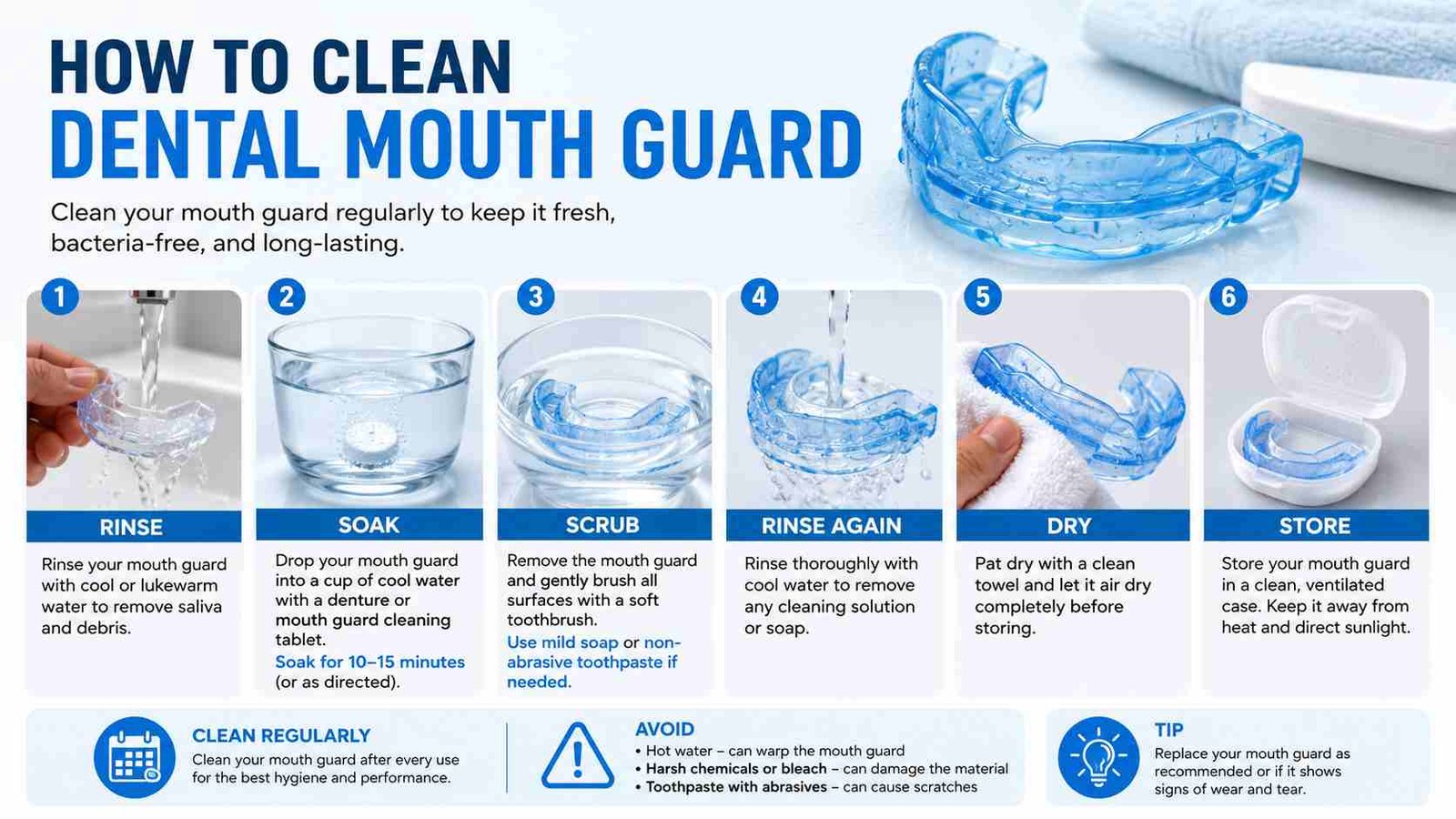
How to Clean Dental Mouth Guard Daily (Step-by-Step)
A simple daily cleaning routine can prevent most hygiene problems.
Step 1 – Rinse Immediately After Use
Remove the mouth guard and rinse it thoroughly under cool water. This helps wash away saliva, bacteria, and loose debris before they dry onto the surface.
Step 2 – Brush Gently
Use a soft-bristled toothbrush to clean all surfaces of the mouth guard. Brush gently to avoid scratching the material. Pay special attention to grooves and hard-to-reach areas where bacteria may collect.
Step 3 – Use Mild Soap
Apply a small amount of mild soap to the toothbrush. Clean the mouth guard carefully and avoid using harsh cleaning products that may damage the material.
Step 4 – Rinse Thoroughly
After brushing, rinse the mouth guard thoroughly to remove any remaining soap residue. Leaving cleaning products behind may affect taste and comfort.
Step 5 – Air Dry Completely
Place the mouth guard on a clean surface and allow it to air dry completely before storing it. Proper drying helps prevent bacterial growth and unpleasant odors.Following these steps every day is one of the easiest ways to keep your mouth guard clean and safe.
How to Deep Clean a Dental Mouth Guard?
Deep cleaning removes buildup that daily cleaning may not fully eliminate.
Method 1 – Clean with Denture Cleaning Tablets
Fill a clean container with water and dissolve a denture cleaning tablet according to the package instructions. Soak the mouth guard for the recommended time, then rinse thoroughly before use. This method is effective for removing bacteria and stains.
Method 2 – Vinegar Soak
Mix equal parts white vinegar and water. Soak the mouth guard for about 20 to 30 minutes. Vinegar helps break down mineral deposits and eliminate odors naturally.
Method 3 – Baking Soda Solution
Mix baking soda with water to create a gentle cleaning solution. Soak the mouth guard for a short period, then rinse well. This method is particularly helpful for removing odors.
Method 4 – Hydrogen Peroxide Cleaning (If Approved)
Some mouth guards can be cleaned using diluted hydrogen peroxide. Always check manufacturer instructions before using this method. Rinse thoroughly afterward to remove all residue.Deep cleaning once a week helps maintain freshness and improve hygiene.
Best Cleaning Products for Dental Mouth Guards
Several products can safely clean and maintain a dental mouth guard.
Commercial Mouth Guard Cleaners
These products are specifically designed for oral appliances. They often contain ingredients that remove bacteria and stains without damaging the material.
Denture Cleaning Tablets
Many dental professionals recommend denture tablets because they provide effective deep cleaning while being easy to use.
Mild Antibacterial Soap
For daily cleaning, mild antibacterial soap is one of the safest and most affordable options available.
Natural Cleaning Solutions
White vinegar and baking soda are popular natural alternatives. They help remove odors and buildup without exposing the mouth guard to harsh chemicals.Choosing gentle cleaning products helps protect both your mouth guard and your oral health.
What Not to Use When Cleaning a Dental Mouth Guard
Some cleaning methods can damage your mouth guard and reduce its effectiveness.
Hot Water
Hot water can warp the material and change the shape of the mouth guard, causing it to fit improperly.
Bleach and Harsh Chemicals
Strong chemicals may weaken the material and leave harmful residues that could irritate your mouth.
Abrasive Toothpaste
Certain toothpastes contain abrasive particles that can scratch the surface of the mouth guard, creating areas where bacteria can accumulate.
Dishwasher Cleaning
Dishwasher heat and detergents can damage the mouth guard and alter its shape.
Boiling Water
Boiling water can permanently distort the appliance and make it unusable.Using gentle cleaning methods is always the safest approach.
How to Remove Stains from a Dental Mouth Guard
Stains can develop over time due to food, beverages, and bacterial buildup.
Causes of Staining
Coffee, tea, colored drinks, and poor cleaning habits often contribute to discoloration. Bacteria and plaque may also create visible stains.
Effective Stain Removal Methods
A vinegar soak can help loosen stains naturally. Denture cleaning tablets are another effective solution. For mild stains, a baking soda paste may help restore a cleaner appearance.
When Stains Won’t Come Off
If stains remain despite repeated cleaning, the mouth guard may be reaching the end of its lifespan. Persistent discoloration often indicates that replacement should be considered.
How to Remove Bad Smells from a Dental Mouth Guard?
Bad odors are usually caused by bacteria and trapped moisture.
Common Causes of Odors
When a mouth guard is stored while wet, bacteria can grow quickly. Inadequate cleaning also contributes to unpleasant smells.
Odor Removal Techniques
Soaking the mouth guard in diluted vinegar can neutralize odors. Baking soda treatments are also effective for reducing smells and refreshing the appliance.
Preventing Future Odors
Always dry the mouth guard completely before storage and follow a consistent cleaning routine. These simple habits help prevent odor problems before they start.
Proper Storage Tips for Dental Mouth Guards
Proper storage is essential for keeping a mouth guard clean between uses.
Use a Ventilated Storage Case
A ventilated case allows air to circulate around the mouth guard, reducing moisture buildup.
Keep It Dry
Store the mouth guard only after it has dried completely. Moist environments encourage bacterial growth.
Avoid Direct Sunlight
Excessive heat from sunlight can damage or warp the material over time.
Keep Away from Pets and Children
Pets often mistake mouth guards for chew toys. Storing the appliance safely helps prevent accidental damage.
Common Mistakes People Make When Cleaning a Dental Mouth Guard
Many people unknowingly shorten the lifespan of their mouth guard through poor cleaning habits. Common mistakes include using hot water, skipping daily cleaning, storing the mouth guard while wet, using harsh chemicals, ignoring signs of damage, and sharing the appliance with others. Avoiding these errors helps maintain hygiene, comfort, and durability.
Signs Your Dental Mouth Guard Needs Replacement
Visible Cracks or Tears
Damaged areas can trap bacteria and reduce protection.
Persistent Odors
Strong odors that remain after thorough cleaning may indicate material deterioration.
Discoloration That Won’t Go Away
Permanent staining often suggests that the mouth guard is wearing out.
Poor Fit or Comfort
A loose or uncomfortable fit may mean the mouth guard has changed shape.
Excessive Wear and Tear
Heavy wear can reduce effectiveness and increase the risk of breakage.
Dentist-Recommended Tips for Keeping Your Mouth Guard Clean
Dental professionals recommend washing your hands before handling your mouth guard, cleaning it immediately after each use, performing weekly deep cleaning, storing it in a ventilated case, attending regular dental checkups, and following the manufacturer’s care instructions. These simple practices can significantly improve hygiene and extend the lifespan of your appliance.
FAQ’s
1. What can I clean my dental mouth guard with?
You can clean your dental mouth guard with a soft toothbrush, mild soap, denture cleaning tablets, white vinegar or baking soda.
2. How long do you boil a mouthguard to mold it?
Most boil-and-bite mouthguards need to be boiled for about 30–60 seconds. Always follow the instructions that come with your mouthguard.
3. How do you get yellow stains out of mouth guards?
Soak the mouth guard in a mixture of white vinegar and water or use denture cleaning tablets. Then brush it gently and rinse well.
4. Do I need to wash my mouth guard every night?
Yes. It is best to clean your mouth guard after every use to remove bacteria, saliva, and debris.
5. Can I use Dawn dish soap to clean my mouthguard?
Yes, a small amount of mild Dawn dish soap can be used to clean a mouthguard. Rinse it thoroughly afterward.
6. Can I mold my mouthguard twice?
Many boil-and-bite mouthguards can be remolded once or twice if needed. Check the manufacturer’s instructions first.
7. What is the downside of wearing a night guard?
Some people may experience mild discomfort, extra saliva, or slight soreness when first wearing a night guard. These issues usually improve with time.
8. Do all mouth guards have to be boiled?
No. Only boil-and-bite mouthguards need boiling. Custom-made and some ready-made mouthguards do not require boiling.
9. Can you get a bacterial infection from a mouth guard?
Yes. A dirty mouth guard can collect bacteria and germs, which may increase the risk of oral infections and bad breath. Regular cleaning helps prevent this.
Conclusion
Knowing how to clean the dental mouth guard properly is an important part of maintaining good oral health. Daily rinsing and gentle brushing help remove bacteria and debris, while weekly deep cleaning keeps the appliance fresh and hygienic. Proper storage, regular inspections, and avoiding harmful cleaning methods can extend the life of your mouth guard and improve comfort. By following these simple care practices, you can keep your mouth guard clean, effective and ready to protect your smile for years to come.
 IQnewswire