
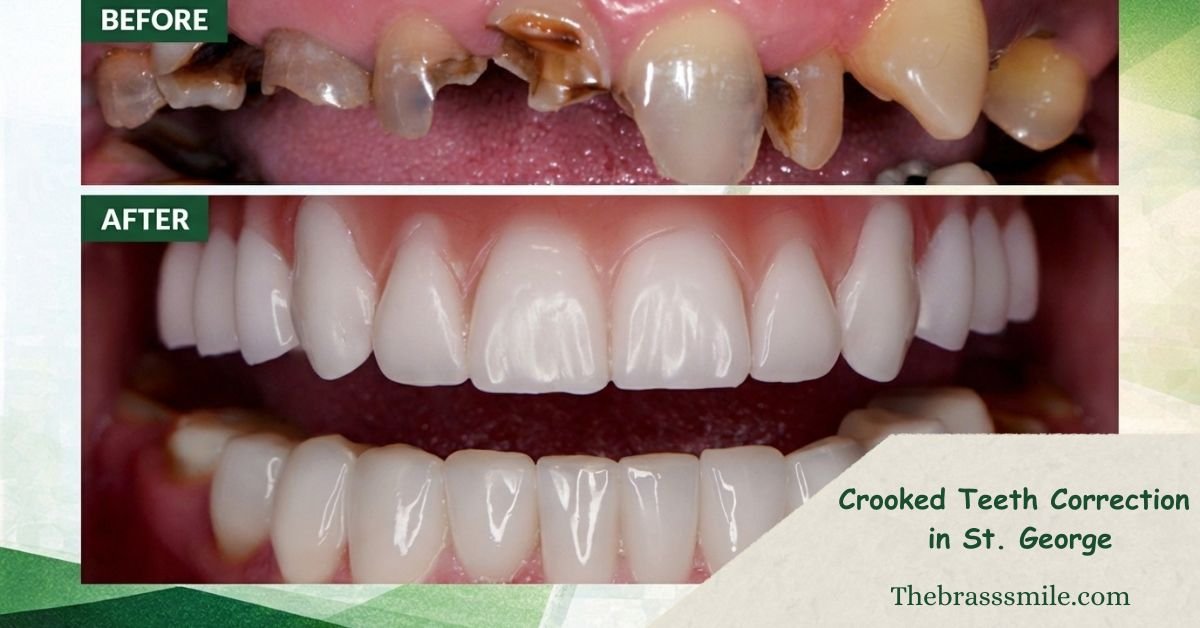
If you live in St. George and you’ve been putting off doing something about your crooked teeth, you’re not alone. A lot of people in this area feel the same way. They are unsure where to start, worried about cost, or just not sure which treatment actually fits their situation.
The good news is that crooked teeth correction in St. George has become easier and more comfortable than it used to be, with options that go far beyond the metal braces most of us remember from middle school.
In this guide, we’ll walk through why teeth shift out of place, what your real treatment options are, how much they tend to cost, and how to pick the right dentist for the job.
Why Do Teeth Become Crooked in the First Place?
Most of the time, crooked teeth aren’t caused by just one thing. It’s usually a mix of genetics and habits that built up over years.
Jaw size plays a bigger role than most people realize. If your jaw is naturally smaller than the space your teeth need, they end up overlapping or twisting just to fit. This is something you inherit, much like eye color, so there’s no real way to prevent it on your own.
Childhood habits also leave a mark. Thumb sucking, using a pacifier past toddler age, or losing baby teeth too early or too late can all push permanent teeth into the wrong position. Mouth breathing and resting your tongue against your teeth instead of the roof of your mouth can also slowly shift things over time, even into adulthood.
Sometimes it’s simpler than that. An injury, a sports accident, or even just teeth naturally drifting with age can cause noticeable crookedness later in life. None of these causes mean you’re stuck with the result forever, though.
Why It’s Worth Fixing, Beyond Just Looks?
It’s easy to think of crooked teeth as a cosmetic issue, but the truth is it affects more than your smile in photos.
Crowded or overlapping teeth are genuinely harder to clean properly. Floss and toothbrush bristles can’t always reach the tight gaps, which means plaque builds up faster and your risk of cavities and gum disease goes up.
Over time, an uneven bite also puts extra pressure on certain teeth and on your jaw joint, which is a common reason people develop jaw pain or headaches without realizing the real cause is misalignment.
There’s also a confidence side to this that’s just as real. Many people in St. George quietly avoid smiling in photos or feel self-conscious in meetings and social settings because of how their teeth look. Fixing that isn’t vanity, it genuinely changes how comfortable you feel day to day.
Crooked Teeth Correction Options Available in St. George!
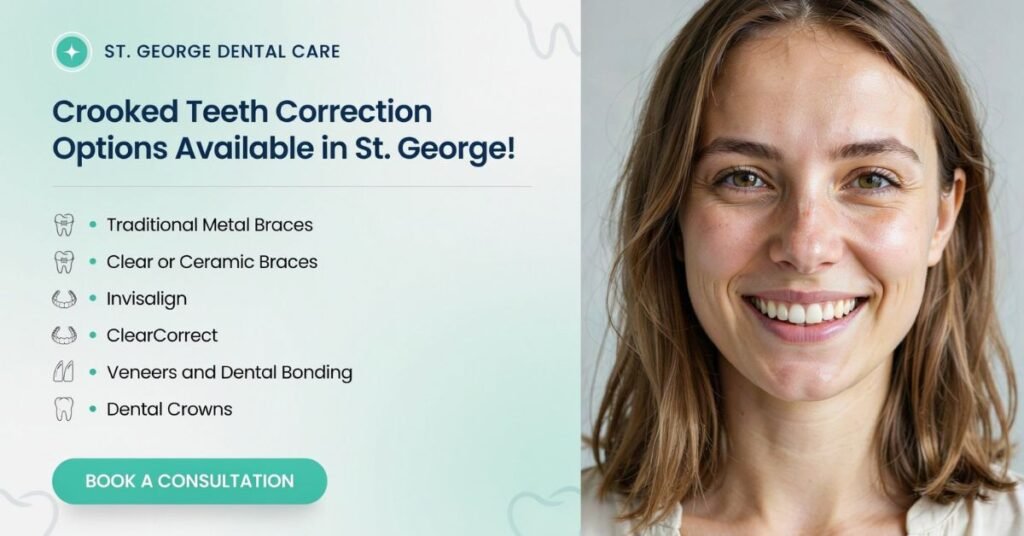
Local dental offices in St. George offer a handful of solid options, and the right one for you depends on how crooked your teeth are, your budget, and how visible you’re okay with the treatment being.
Traditional Metal Braces
Despite all the newer options, traditional braces are still one of the most reliable ways to fix significant crowding or bite problems. Metal brackets are bonded to each tooth, and a wire running through them is adjusted over time to slowly guide teeth into place.
They’re not the most discreet option, but they’re often the most predictable for complex cases, and today’s brackets are smaller and more comfortable than older versions.
Clear or Ceramic Braces
These work the same way as metal braces, but the brackets are tooth-colored, so they blend in much better. They’re a popular middle ground for teens and adults who need the strength of fixed braces but don’t want the metal-mouth look for a year or two.
Invisalign
Invisalign uses a series of clear, removable aligner trays instead of brackets and wires. Most St. George dental offices now use digital scanners to map your teeth and show you a preview of how your smile will shift before you even start.
You switch to a new aligner roughly every two weeks, and because the trays come out for eating and brushing, it tends to fit more easily into everyday life. It works best for mild to moderate misalignment, though more severe crowding can sometimes still be treated this way depending on your case.
ClearCorrect
ClearCorrect is another clear aligner system, similar in concept to Invisalign but offered by a different manufacturer. Some patients choose it because of cost differences or because their dentist has more experience with this particular brand.
The day to day experience is very similar. Removable trays, gradual movement, and a final smile that matches the digital plan.
Veneers and Dental Bonding
If your teeth are only slightly out of place and you’re mainly bothered by the appearance, veneers or bonding can sometimes be a faster fix. Thin shells or tooth-colored resin are placed over the visible surface of the teeth to create a straighter-looking smile without actually moving the teeth.
This isn’t a true alignment fix, but for minor cosmetic concerns, it can be a quicker and more affordable route.
Dental Crowns
Crowns are mainly used to repair damaged or weakened teeth, but they can also be shaped to even out the appearance of a crooked tooth as a side benefit. This is usually only recommended if a tooth already needs a crown for health reasons, not as a standalone straightening method.
Also Check: How To Clean Dental Mouth Guard? Complete Guide For Proper Care
Comparing Your Options at a Glance
Here’s a simple side-by-side look to help you narrow things down before your consultation.
| Treatment | Best For | Visibility | Typical Time |
| Traditional Metal Braces | Severe crowding or bite issues | Visible | 18-30 months |
| Clear/Ceramic Braces | Teens and adults wanting subtlety | Low visibility | 18-30 months |
| Invisalign | Mild to moderate misalignment, removable preference | Nearly invisible | 12-18 months |
| ClearCorrect | Similar to Invisalign, budget-conscious patients | Nearly invisible | 12-18 months |
| Veneers / Bonding | Minor crookedness, cosmetic-only fix | Permanent restoration | 1-2 visits |
Can You Straighten Crooked Teeth at Home?
If you’ve searched online, you’ve probably come across videos or forum posts suggesting rubber bands, DIY plastic trays, or wearing wax to nudge teeth into place. It’s understandable why this looks tempting, it seems cheaper and faster. But dentists in St. George consistently warn against this, and for good reason.
Teeth aren’t just sitting in your gums. They’re anchored by a network of ligaments and bone that needs to be moved gradually and in a very specific direction. Without X-rays and a proper treatment plan, DIY methods can cause uneven pressure, gum damage, or even tooth and bone loss.
What feels like a shortcut can end up costing far more to repair later. If cost is the real concern, it’s worth asking a local dentist about payment plans before trying anything risky at home.
What Treatment Actually Looks Like, Step by Step!
Most St. George dental offices follow a fairly similar process, regardless of which treatment you choose.
It starts with a consultation, where the dentist examines your bite and takes digital scans or X-rays instead of the old style messy molds. From there, they build a custom plan, often showing you a preview of your projected results before treatment even begins. Once treatment starts, you’ll have regular check-ins every few weeks to track progress and make small adjustments.
After your teeth reach their final position, you’ll be given a retainer to wear, usually at night, to stop them from drifting back. Skipping the retainer phase is one of the most common reasons people see their teeth shift again after spending months on treatment.
Never Miss: Which Fruit Is Good For Teeth And Gums? Best Fruits For A Healthy Smile
How Much Does Crooked Teeth Correction Cost in St. George?
Costs vary quite a bit depending on the treatment and how complex your case is, so it’s hard to give one exact number. Generally speaking, traditional metal braces tend to be the most affordable fixed option, clear aligners like Invisalign and ClearCorrect usually sit in a similar or slightly higher range, and veneers or bonding can be cheaper upfront but don’t address the underlying alignment.
What changes the price more than the treatment type itself is the severity of your case and how long treatment needs to run. Many local offices offer financing or monthly payment plans, and some accept dental insurance for orthodontic coverage, so it’s worth asking directly during your consultation rather than assuming it’s out of reach.
How to Choose the Right Dentist in St. George?
With several dental offices around St. George offering similar treatments, picking the right one comes down to a few practical things.
• Ask whether they have specific experience with your treatment type, such as Invisalign certification.
• Check if they use modern digital scanning instead of old style impressions, since it’s more comfortable and more accurate.
• Look at real patient reviews and before and after photos, not just the practice’s own marketing.
• Confirm what financing or insurance options they accept before committing.
• Pay attention to how clearly they explain your specific case during the first consultation, since a good dentist won’t rush this part.
Frequently Asked Questions
How long does crooked teeth correction take in St. George?
It depends on the treatment and how crowded your teeth are, but most cases fall somewhere between 12 and 30 months. Mild cases with clear aligners can sometimes finish faster, while more complex bite issues with traditional braces may take closer to two years.
Is Invisalign as effective as braces for crooked teeth?
For mild to moderate crowding, yes. Invisalign can be just as effective. For severe misalignment or complicated bite issues, traditional braces are sometimes still the better fit. Your dentist can tell you which category your case falls into after an exam.
Can adults get crooked teeth corrected, or is it too late?
Age really isn’t the barrier people assume it is. Teeth can be moved at almost any age as long as the gums and bone are healthy, which is why a large number of Invisalign and clear aligner patients in St. George are adults, not just teenagers.
Does dental insurance cover orthodontic treatment?
Some plans cover a portion of orthodontic treatment, especially for more serious bite issues, but coverage varies a lot between providers. It’s best to confirm directly with both your insurance company and the dental office before starting treatment.
What happens if crooked teeth are left untreated?
Over time, untreated crowding tends to make cleaning harder, which raises the risk of cavities and gum disease. It can also lead to uneven wear on certain teeth and jaw discomfort from an unbalanced bite, so the problem doesn’t usually stay the same. It slowly gets harder to manage.
Final Thoughts:
Crooked teeth correction in St. George doesn’t have to mean committing to years of metal brackets if that’s not what you want. Between traditional braces, clear aligners, and cosmetic options like veneers, there’s a realistic path for almost every situation and budget. The most useful first step is simply booking a consultation with a local dentist who can look at your specific case and walk you through what would actually work, rather than guessing based on what worked for someone else.
 IQnewswire
  Admin
Admin