
Introduction
Swollen gums can make brushing, eating, and even speaking uncomfortable. They may look red, puffy, shiny, or feel tender when you touch them. In many cases, swollen gums are linked to plaque buildup and gingivitis, especially when brushing and cleaning between the teeth are not done regularly. However, other problems, such as food trapped between teeth, dental infections, hormonal changes, braces, dentures, certain medicines, and some health conditions, can also cause gum swelling.
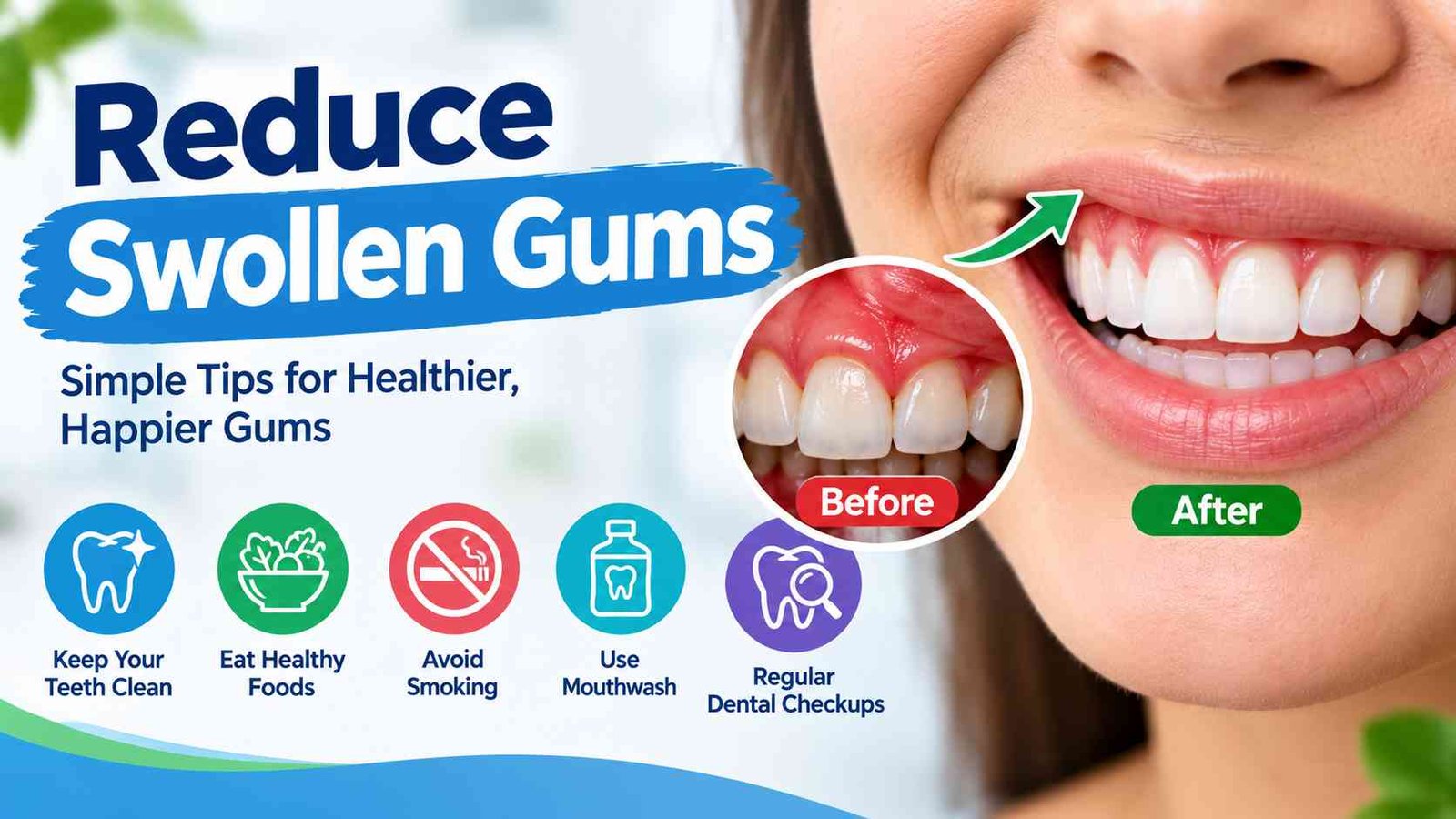
So, how to reduce swollen gums? Start with gentle oral care. Brush your teeth twice a day with a soft-bristled toothbrush, clean between your teeth daily, and consider a warm salt-water rinse to soothe irritated gums. However, home care is not always enough. If swelling is severe, keeps coming back, lasts for a long time, or occurs with fever, pus, severe pain, or facial swelling, you should see a dentist.The key is to find the reason behind the swelling. Once the cause is treated, the gums can often return to a healthier condition.
What Are Swollen Gums?
Swollen gums are gums that have become enlarged, inflamed, or irritated. Healthy gums are generally firm and fit closely around the teeth. They should not normally look puffy or bleed easily. When the gum tissue becomes irritated, it may become red or darker than usual, soft, shiny, swollen, or tender.
Swollen gums can also cause other symptoms. You may notice bleeding when brushing or flossing, bad breath, a bad taste in your mouth, tenderness, or discomfort while chewing. Some people may also experience tooth sensitivity or notice that the gums feel different around certain teeth. These symptoms can vary depending on what is causing the inflammation.
It is important to understand that swollen gums are usually a symptom rather than a disease by themselves. For example, plaque buildup can irritate the gums and lead to gingivitis. A dental abscess can cause swelling around one tooth, while hormonal changes can make the gums more sensitive to plaque.
Because the treatment depends on the cause, simply trying to reduce the swelling without addressing the underlying problem may only provide temporary relief. If the swelling continues or becomes worse, a dental examination can help identify the reason.
What Causes Swollen Gums?
There are several possible reasons for swollen gums. The most common is plaque buildup. Plaque is a sticky layer containing bacteria that develops on teeth. If it is not removed regularly, it can irritate the gumline and cause gingivitis. Gingivitis commonly causes red, swollen, and bleeding gums and can often be improved with proper oral care and professional cleaning when necessary.
More advanced gum disease can also cause persistent swelling. Periodontitis affects the tissues supporting the teeth and may eventually contribute to gum recession, loose teeth, and bone loss if it is not treated.
Sometimes, the cause is more localized. Food such as popcorn, seeds, or small pieces of hard food can become trapped between a tooth and the gum. This can irritate the area and cause swelling around one tooth. Dental problems such as tooth decay, a cracked tooth, or an abscess can also cause gum swelling.
Hormonal changes are another possible cause. Pregnancy and puberty can make gum tissue more sensitive to plaque. Braces and poorly fitting dentures may also irritate the gums or make cleaning more difficult. Certain medicines and health conditions, including diabetes, can affect gum health as well.Because there are so many possible causes, recurring or unexplained swelling should be checked by a dental professional.
How to Reduce Swollen Gums at Home?
If your swollen gums are caused by mild irritation or plaque buildup, improving your daily oral care may help reduce inflammation. Start by brushing your teeth gently twice a day with a soft-bristled toothbrush and fluoride toothpaste. Pay attention to the gumline, but avoid scrubbing hard. Aggressive brushing can irritate already-sensitive gums.
Cleaning between your teeth is just as important. Floss gently once a day to remove plaque and food particles that your toothbrush cannot reach. If traditional floss is difficult to use, ask your dentist about another suitable method for cleaning between your teeth. Continuing to clean the area is generally better than avoiding it completely because the gums are tender.
A warm salt-water rinse may also provide temporary comfort. It can soothe sore gums and may help ease swelling, but it should not be considered a cure for a dental abscess or serious infection. You can also use a cold pack against the outside of your cheek for short periods if the area feels swollen or uncomfortable. Do not place ice directly on your skin.
Drink enough water to help keep your mouth moist and rinse away some food particles. It can also help to avoid very hard, spicy, or extremely hot foods while the gums are sore. Smoking and tobacco can increase the risk of gum problems, so avoiding them can support better gum health.
How Long Does It Take for Swollen Gums to Go Down?
The time needed for swollen gums to improve depends on the cause. Mild irritation may settle after the source of irritation is removed and better oral hygiene is started. For example, if food becomes trapped between two teeth, carefully cleaning the area may allow the gum to become more comfortable.
Gingivitis can also improve with consistent brushing, daily cleaning between the teeth, and professional dental care when needed. Mayo Clinic notes that healthy gum tissue can return within days or weeks after appropriate treatment and improved daily oral care.
However, swelling caused by an infection, advanced gum disease, an abscess, or another dental problem may not disappear with home care alone. In these situations, treating the underlying problem is important.
Do not ignore swelling simply because it is not painful. Some gum problems can develop with few obvious symptoms. Cleveland Clinic recommends contacting a dentist when noticeable gum swelling lasts longer than two weeks or gets worse. Healthdirect recommends seeing a doctor or dentist when swelling does not improve after a few days, particularly when other symptoms are present.If the swelling continues, keeps returning or becomes more severe, professional advice is the safest option.
How to Reduce Swollen Gums Around One Tooth?
Swelling around one tooth can have a more specific cause than general gum inflammation. Food trapped near the gumline is one possibility, especially after eating foods that can break into small pieces. Gentle flossing may help remove trapped food, but avoid forcing the floss into the gums.
A swollen area around one tooth can also be related to tooth decay, gum disease, a cracked tooth, irritation from dental work, or a dental abscess. An abscess is particularly important because it involves an infection and may cause swelling, pain, pus, a bad taste, or swelling in the cheek or jaw.
If one area remains swollen after careful cleaning, do not repeatedly poke, squeeze, or try to drain the swelling yourself. Home remedies may temporarily make the area feel better without treating the actual problem.
A dentist can examine the tooth and surrounding gum to determine what is happening. Depending on the cause, treatment might involve professional cleaning, treatment for tooth decay, root canal treatment, drainage of an abscess, or another dental procedure.If the swelling is accompanied by fever, severe pain, facial swelling, trouble swallowing, or trouble breathing, seek urgent dental or medical care rather than waiting for it to disappear.
How Dentists Treat Swollen Gums?
Dental treatment for swollen gums depends on the underlying cause. If plaque and tartar are responsible, a professional dental cleaning may be recommended. Tartar is a hardened plaque that cannot be removed effectively with normal brushing at home. Removing this buildup can make it easier for the gums to heal.
If gum disease has progressed, a dentist may recommend deeper cleaning. Scaling and root planing removes plaque and tartar from above and below the gumline and cleans the tooth root surfaces. This type of treatment may be needed when gum inflammation has progressed beyond simple gingivitis.
When swelling is caused by a dental infection, treatment focuses on the infected tooth or area. Depending on the problem, a dentist may recommend root canal treatment, drainage, or extraction. Antibiotics may be used for certain bacterial infections, but they are not automatically needed for every case of swollen gums.
If a medicine is contributing to gum enlargement, the dentist or doctor may review the medication and discuss appropriate options. You should never stop a prescribed medicine on your own.
The important point is that treatment should match the cause. Simply reducing swelling without treating an infection, gum disease, or damaged tooth may allow the problem to return.
When Should You See a Dentist for Swollen Gums?
Not every case of swollen gums is an emergency, but persistent or worsening swelling should not be ignored. Make a dental appointment if your gums remain swollen, the problem keeps returning, or you regularly experience bleeding, tenderness, bad breath, or unusual changes in your gums.
You should also arrange a dental examination if a tooth feels loose or the swelling is concentrated around one tooth. These signs can sometimes point to gum disease or another dental problem that requires professional treatment.
Urgent care is more important when swelling occurs with severe pain, fever, pus, or swelling of the face or jaw. Difficulty swallowing or breathing can indicate a potentially serious infection or spreading swelling and requires urgent medical attention.
A useful rule is not to judge the seriousness of gum swelling only by how much it hurts. Some dental problems can cause significant changes before severe pain develops. If you are unsure about the cause, a dentist can examine your teeth and gums and decide whether you need cleaning, dental treatment, medication, or further evaluation.Early attention can also prevent a smaller dental problem from becoming more complicated.
How to Prevent Swollen Gums?
Preventing swollen gums starts with consistent oral hygiene. Brush your teeth twice a day using a soft toothbrush and fluoride toothpaste. Spend enough time cleaning around the gumline without using excessive pressure. Clean between your teeth once a day to remove plaque and food that a toothbrush cannot reach.
Regular dental checkups are also important because tartar cannot be completely removed through normal brushing and flossing. A dental professional can identify early signs of gum disease and provide cleaning when needed.
Your everyday habits also matter. Eating a balanced diet and limiting excessive sugary foods can support your teeth and gums. Drinking water can help keep the mouth comfortable, while avoiding tobacco can reduce a major risk factor for gum disease.If you wear braces or dentures, follow your dentist’s cleaning instructions carefully. Poorly fitting dentures or plaque around orthodontic appliances can contribute to gum irritation.
Finally, do not ignore small changes. Bleeding, redness, swelling, or persistent bad breath can be early signs of gum problems. Treating these issues early is usually easier than waiting until the gums or supporting tissues become seriously affected.
What Not to Do for Swollen Gums?
When your gums are swollen, it can be tempting to try strong home remedies or stop brushing because the area is uncomfortable. Avoid these approaches. Do not brush aggressively, but do continue gentle daily brushing. Removing plaque is important when gum inflammation is related to gingivitis.
Do not pop, squeeze, or try to drain a lump on your gum. If an abscess is present, attempting to treat it yourself can delay proper care. A warm salt-water rinse may provide temporary relief, but it cannot replace dental treatment for an infection.
You should also avoid placing aspirin directly against your gums because it can irritate or damage the tissue. If you take prescription medicine that may be contributing to gum enlargement, do not stop taking it without speaking with your doctor.
Most importantly, do not ignore swelling that persists or becomes worse. Home care is useful for supporting healthy gums, but it cannot correct every dental problem. If swelling is associated with fever, pus, severe pain, facial swelling, or difficulty swallowing or breathing, seek professional care promptly.
FAQs
1. Can swollen gums be reduced overnight?
There is no guaranteed overnight treatment. If the swelling is caused by mild irritation, gentle brushing, flossing, and a warm salt-water rinse may help you feel more comfortable. The swelling may take longer to fully settle.
2. Should I stop flossing when my gums are swollen?
Usually, you should continue gently cleaning between your teeth. Stopping completely can allow plaque and food particles to remain around the gums. If flossing causes significant pain or bleeding that continues, speak with your dentist.
3. Why are my gums swollen even though I brush every day?
Brushing alone does not clean every surface between the teeth, and tartar requires professional removal. Swelling can also result from gum disease, an infection, hormonal changes, medications, or another dental problem.
4. Can a swollen gum mean something is wrong with one tooth?
Yes. Swelling around one tooth can sometimes be caused by trapped food, decay, a cracked tooth, gum disease, or an abscess. Persistent swelling around one tooth should be examined by a dentist.
5. Can swollen gums be prevented permanently?
You can greatly reduce the risk by brushing twice daily, cleaning between your teeth, having regular dental checkups, eating a balanced diet, and avoiding tobacco. However, some causes, such as hormonal changes or medication-related gum enlargement, may still require professional management.
Conclusion
Knowing how to reduce swollen gums starts with understanding why they are swollen. Plaque and gingivitis are common causes, but trapped food, gum disease, infections, hormonal changes, dental appliances, medicines, and health conditions can also play a role. Gentle brushing, daily cleaning between the teeth, warm salt-water rinses, good hydration, and avoiding tobacco can support healthier gums and may relieve mild irritation.However, home care should not replace professional treatment when the swelling persists or becomes severe. Swelling with fever, pus, severe pain, facial swelling, or difficulty swallowing or breathing needs prompt attention. If your gums remain swollen or the problem keeps returning, a dentist can identify the cause and recommend the right treatment.
 IQnewswire
[…] READ ALSO: How To Reduce Swollen Gums? Causes, Home Remedies And Treatment […]