
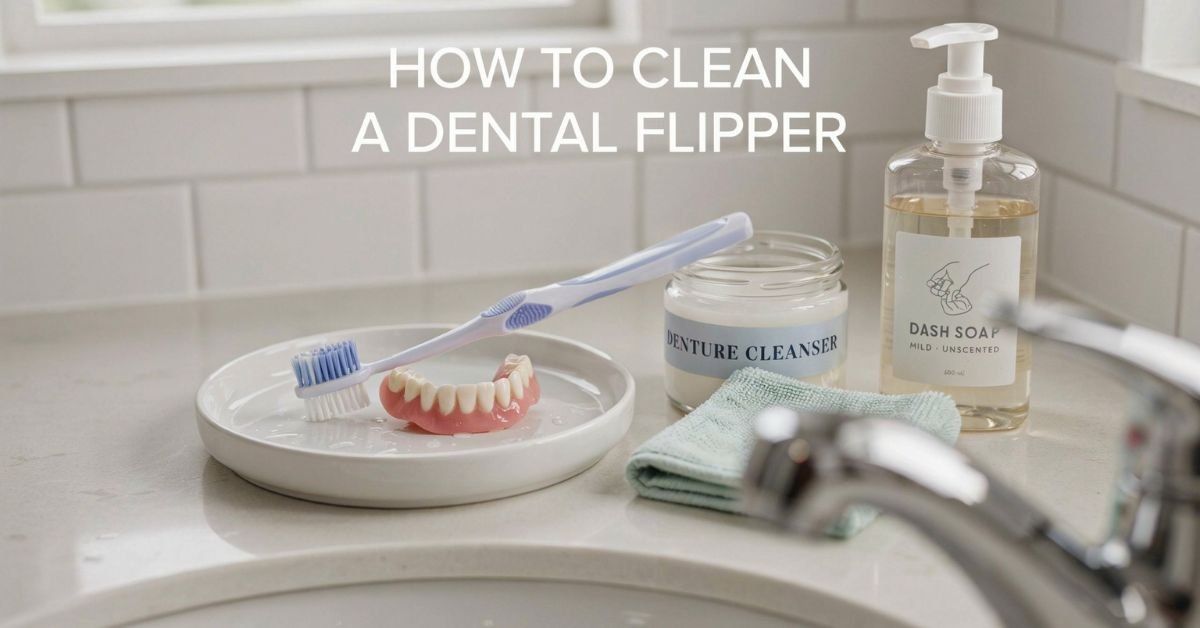
A dental flipper may look small, but it plays a big role in your smile and confidence. Many people use it after losing a tooth, especially as a temporary solution.
The problem is that most people do not pay enough attention to properly cleaning it. When a dental flipper is not cleaned the right way, it can collect bacteria, cause a bad smell, and even lead to gum problems. That is why understanding how to clean a dental flipper is so important. With a simple routine, you can keep it fresh, safe, and long-lasting.
If you just got your flipper and are not sure how to keep it clean, this guide walks you through everything step by step so you can take proper care of it from day one.
What Is a Dental Flipper?
A dental flipper, sometimes called a flipper tooth, is a removable partial denture made mostly of acrylic resin. It is shaped to match your gum color and holds one or more fake teeth in place using small clasps that grip your natural teeth. Dentists usually recommend a flipper for patients who are missing a tooth because of an accident, decay, or extraction, and who need something to wear while a permanent implant heals or is being made. Because a flipper can be popped in and out easily, it is convenient to clean, but that same removable design also means it needs more attention than a fixed tooth. Acrylic is softer than natural enamel, so it can scratch, stain, or warp if it is not cared for properly.
Why Cleaning Your Dental Flipper Properly Matters?
Your mouth produces saliva all day, and that saliva carries bacteria, food particles, and plaque. When you wear a flipper, all of that builds up on the surface of the appliance just like it would on a natural tooth.
The difference is that a flipper covers part of your gum, which traps moisture and bacteria underneath it. If you do not clean it often, this can lead to a sour smell, a film of plaque, gum redness, and in some cases a fungal infection known as denture stomatitis.
On top of the health side, a flipper that is not cleaned well will also look worse over time. Acrylic can pick up stains from coffee, tea, and other dark foods, and plaque buildup can make the appliance look dull or yellow even if you brush your natural teeth every day. A simple daily habit prevents almost all of these problems.
Supplies You Need to Clean a Dental Flipper!
You do not need anything expensive to keep a flipper clean. Most of these items are already in your bathroom or available at any pharmacy.
• A soft bristled brush, ideally one made for dentures, though a soft toothbrush works fine
• Mild soap such as dish soap or hand soap, or a denture safe cleanser
• Lukewarm water, never hot
• Denture cleaning tablets for the weekly soak
• A small container with a lid for storage
Avoid regular toothpaste. It contains abrasive particles meant for hard enamel, and using it on acrylic can leave tiny scratches. Those scratches trap bacteria and make the flipper harder to keep clean over time.
How to Clean a Dental Flipper – Daily Cleaning Routine!
Cleaning your flipper daily is the single most important habit for keeping it fresh and safe to wear. Try to follow these steps in the morning, before bed, and after meals whenever possible.
Step 1: Remove the Flipper Carefully
Use clean hands to gently lift the flipper out using the clasps or edges. Avoid bending it or pulling it out at an angle, since this puts pressure on the clasps and can loosen them over time.
Step 2: Rinse Under Lukewarm Water
Hold the flipper under running lukewarm water to wash away loose food particles and saliva. Never use hot or boiling water, since heat can warp the acrylic and change the shape of the flipper, which affects how it fits in your mouth.
Step 3: Brush Gently With Mild Soap
Wet your soft bristled brush and add a small amount of mild soap or a denture safe cleanser. Brush every surface of the flipper, including the part that rests against your gums, using gentle circular motions. Press lightly. Acrylic is more delicate than natural teeth, so scrubbing hard can cause tiny scratches.
Step 4: Rinse Thoroughly Before Reinserting
Once you are done brushing, rinse the flipper well under lukewarm water to remove all soap residue. Swallowing soap residue is not harmful in small amounts, but it can leave an unpleasant taste, so a thorough rinse is worth the extra few seconds.
Step 5: Clean Over a Soft Surface
Always clean your flipper over a sink filled with a little water, or place a folded towel on the counter first. Flippers are light and can slip out of wet hands easily. Cleaning over a hard, dry surface increases the chance that a dropped flipper will crack or break.
Deep Cleaning Your Dental Flipper Each Week!
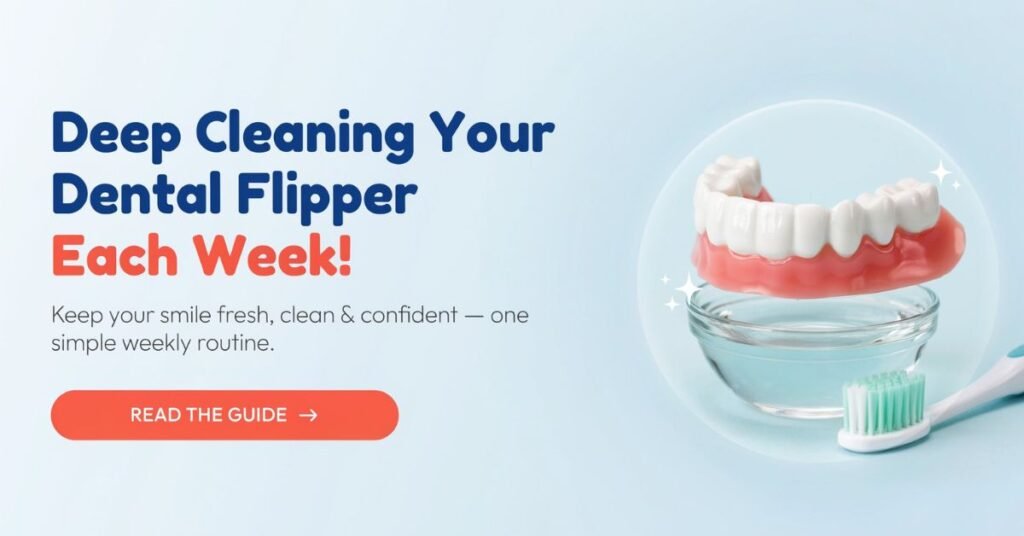
Daily brushing helps remove dirt from the surface, but it does not always clean the bacteria hiding in small areas or under the clasps. That is why it is important to deep clean your dental flipper once or twice a week. If you are wondering what’s the best way to clean a flipper tooth, soaking it in a denture solution is one of the most effective methods.
Place your flipper fully in the solution and let it soak for about fifteen to thirty minutes or overnight, depending on the product. After soaking, take it out and rinse it well with lukewarm water before using it again. If you still see any stains or buildup, gently brush it with a soft brush and rinse it one more time.
This deep cleaning helps remove bacteria that normal brushing may miss and also helps reduce stains from drinks like tea or coffee.
Can You Sleep with a Dental Flipper?
Many people ask if they can sleep while wearing a dental flipper. Technically, you can, but it is not recommended. Removing it at night allows your gums to relax and reduces the risk of irritation or infection. It also gives you a chance to clean it properly before storing it. If you keep wearing it all the time, it may lead to hygiene issues and discomfort.
How to Store a Dental Flipper When You Are Not Wearing It!
A dental flipper should stay slightly moist to remain in good condition. If it becomes dry, it can turn weak, crack easily, or even lose its shape, which can affect how it fits in your mouth.
When you are not wearing it, especially at night, place it in a clean container filled with water or a denture cleaning solution. Make sure the container has a tight lid so it does not spill or stay open. Keep it away from children and pets, because they may treat it like a small toy.
Do not wrap your flipper in a tissue or a napkin, as it can be thrown away by mistake. Also, never leave it out in the open air, even for a short time, because it can get damaged.
Common Mistakes to Avoid When Cleaning a Dental Flipper
A few habits seem harmless but can shorten the life of your flipper or cause discomfort. Here is what to steer clear of.
• Using regular toothpaste, which is too abrasive for acrylic and can scratch the surface
• Cleaning with hot or boiling water, which can warp the shape and ruin the fit
• Using bleach, alcohol based mouthwash, or harsh household cleaners, which can damage the material and may be unsafe to put in your mouth afterward
• Letting the flipper dry out for long periods, which makes the acrylic brittle
• Pushing or moving the flipper around with your tongue while wearing it, which can loosen the clasps and affect the fit over time
Foods and Drinks That Can Stain or Damage Your Flipper!
Just like natural teeth, acrylic can absorb color from certain foods and drinks. Coffee, black tea, red wine, beets, and cranberry juice are some of the most common culprits behind discoloration. You do not need to avoid these completely, but rinsing your flipper right after consuming them helps prevent stains from setting in.
It is also smart to be cautious with very sticky or hard foods such as caramel, hard candy, or ice. These can pull at the clasps or crack the acrylic, especially since a flipper is not as strong as a natural tooth or a permanent implant.
How Often Should You Clean a Dental Flipper?
A simple way to remember your routine is to think of it in three parts: daily care, weekly deep cleaning, and nightly storage. The table below breaks down what each one involves.
| Care Type | How Often | What It Involves |
| Daily Cleaning | After meals, morning, and before bed | Rinse, gentle brushing with mild soap, thorough rinse |
| Deep Cleaning | One to two times a week | Soaking in a denture cleaning solution to remove hidden bacteria and stains |
| Overnight Storage | Every night | Keep in water or soaking solution in a lidded container to prevent drying out |
Signs Your Dental Flipper Needs a Dentist’s Attention!
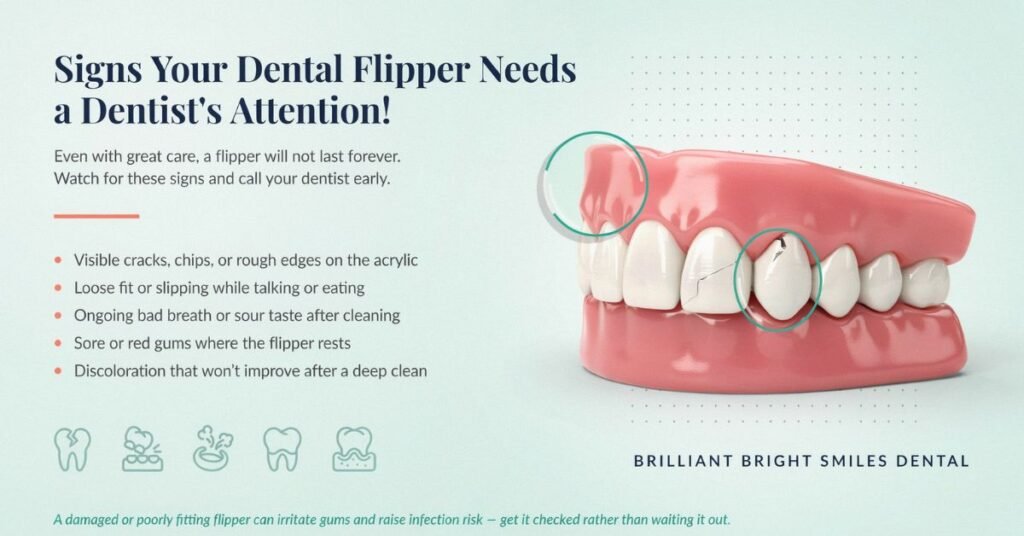
Even with great care, a flipper will not last forever, and small problems are easier to fix early. Watch for the following signs and call your dentist if you notice any of them.
• Visible cracks, chips, or rough edges on the acrylic
• A loose fit or the flipper slipping out of place while talking or eating
• Ongoing bad breath or a sour taste even after cleaning
• Sore or red gums where the flipper rests
• Discoloration that does not improve after a deep clean
Using a damaged or poorly fitting flipper for a long time can irritate your gums and raise the risk of infection, so it is worth getting it checked rather than waiting it out.
Tips for Extending the Life of Your Dental Flipper!
To extend the life of your dental flipper, it is important to take proper care of it every day. You should visit your dentist every three to six months for a check up and adjustment if needed.
Always handle the flipper gently and avoid forcing it in or out of place, as this can cause damage. Keeping your natural teeth and gums clean is also essential because healthy gums help the flipper fit better. It is a good habit to remove the flipper before sleeping unless your dentist has advised otherwise.
In addition, make sure to replace your denture cleaning tablets and brush regularly so they remain effective and safe to use.
Frequently Asked Questions
Can I clean a dental flipper with toothpaste?
It is best to avoid regular toothpaste. Most kinds contain mild abrasives that are fine for natural enamel but too rough for acrylic. Over time, this can leave tiny scratches that trap bacteria and make the flipper harder to clean. Mild soap or a denture safe cleanser is a better choice.
Can I use mouthwash on my flipper?
Regular mouthwash, especially alcohol based versions, is not recommended for soaking a flipper since it can dry out and damage the acrylic. If you want to freshen your flipper, a denture cleaning tablet made for this purpose is a safer option.
How long does a dental flipper usually last?
With proper care, a flipper can last anywhere from one to several years, though it is generally meant as a temporary solution while you wait for a permanent option like an implant. The lifespan depends on how well it is cleaned, stored, and handled day to day.
Can I clean my flipper with vinegar or baking soda?
Some people use diluted vinegar or baking soda as a home remedy, but these can be too acidic or abrasive for acrylic if used often or in strong amounts. It is safer to stick with mild soap for daily cleaning and a proper denture solution for weekly soaking.
Is it safe to sleep with a dental flipper in?
Most dentists recommend taking the flipper out at night so your gums can rest and air can reach the area. Wearing it constantly without giving your mouth a break can increase the risk of irritation or infection, so check with your dentist about what is right for your situation.
What should I do if my flipper smells bad even after cleaning?
A persistent smell usually means bacteria are building up somewhere brushing is not reaching, often around the clasps or the gum side of the appliance. Try a longer soak in a denture cleaning solution, and if the smell continues, have your dentist take a look since it could be a sign of an infection.
Final Thoughts:
Cleaning a dental flipper does not take much time once it becomes part of your daily routine. A quick rinse and gentle brush after meals, a deeper soak each week, and proper storage at night are really all it takes to keep your flipper fresh, comfortable, and free of bacteria.
Pay attention to how it fits and looks over time, and do not hesitate to reach out to your dentist if something feels off. With the right habits, your flipper can serve you well for as long as you need it, whether that is a few months or a few years while you wait for a more permanent solution.
 IQnewswire
  Admin
Admin
[…] READ ALSO: How to Clean a Dental Flipper – Easy & Correct Steps! […]