
Introduction
Full mouth extraction is a dental procedure where all teeth in the upper jaw, lower jaw, or both are removed due to severe decay, infection, gum disease, or damage that cannot be treated with other methods. While the procedure itself is often the first step toward better oral health, the real recovery journey begins afterward when the gums and underlying bone start healing.
Gum healing is the most important part of recovery because it determines how well the mouth closes, how quickly pain reduces, and how smoothly future treatments like dentures or implants can be placed. If gum tissue does not heal properly, it can lead to infection, discomfort, or delayed bone recovery.
In most cases, healing takes several weeks to a few months, depending on age, health condition, and how well aftercare instructions are followed. Bone healing continues even longer beneath the surface, even after the gums look normal.
In this article, you will learn what helps heal gums after full mouth extraction, the recovery timeline, foods that support healing, care routines, common mistakes, and warning signs to watch for.
What Happens to Gums After Full Mouth Extraction?
After full mouth extraction, the body immediately begins a natural healing process. The first and most important step is the formation of blood clots inside each empty socket. These clots act like a protective barrier, covering exposed bone and nerve endings. Without them, healing becomes painful and complicated.
Within the first few days, soft tissue cells start growing over the extraction sites. This is the beginning of gum regeneration. The area may feel swollen or tender, which is a normal part of the inflammatory healing response.
Over the next one to three weeks, gum tissue gradually begins closing the sockets. The surface may still look uneven, but underneath, strong biological repair is happening. This stage is crucial because the gums are still fragile and need protection from pressure, bacteria, and irritation.
Meanwhile, the bone beneath the gums starts a much slower healing process that can continue for several months. This bone remodeling is essential for long-term oral stability, especially if dentures or implants are planned later.
Protecting the blood clot during the early stage is the most important step in recovery. Any disturbance, such as rinsing too aggressively or using a straw, can delay healing and cause complications like dry socket.
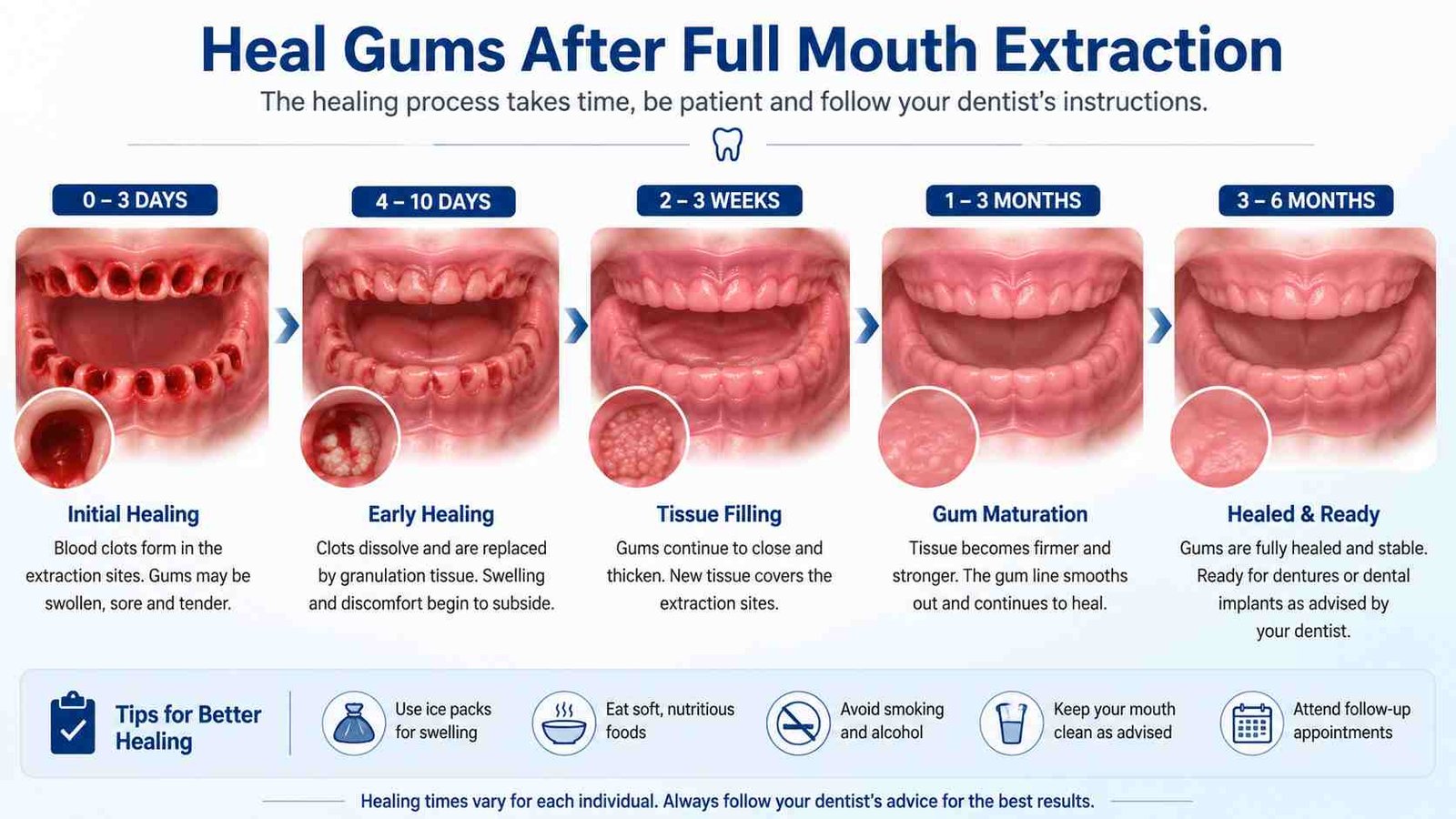
Healing Timeline of Gums After Full Mouth Extraction
First 24 to 72 Hours
The first three days are the most sensitive phase of recovery. Blood clot formation must remain undisturbed, as it protects the underlying bone and nerves. Mild bleeding, swelling, and discomfort are completely normal during this period. Patients are usually advised to avoid rinsing, spitting, or using straws, as suction can dislodge the clot and slow healing.
First Week
During the first week, swelling often peaks and then slowly begins to reduce. Pain gradually becomes manageable with prescribed medication. Soft tissue repair starts forming over the sockets, but the gums are still very delicate. Proper rest and careful oral care are essential during this phase.
2 to 3 Weeks
By the second and third week, noticeable improvement occurs. The gum tissue starts closing more visibly, and discomfort decreases significantly. Most people can return to light daily activities, but hard foods and pressure on the gums should still be avoided.
1 to 3 Months
At this stage, the gums usually cover the extraction sites completely. The surface may look healed, but deeper bone repair is still ongoing. This is when patients often begin preparing for dentures or further dental planning.
3 to 6 Months
Complete bone remodeling takes place during this time. The jawbone strengthens and stabilizes under the healed gum tissue. Although everything may look normal externally, internal healing is still progressing.
What Helps Heal Gums After Full Mouth Extraction?
Proper aftercare plays the biggest role in recovery success. When patients follow correct habits, healing becomes faster, smoother, and less painful.Gentle oral hygiene is one of the most important factors. After the first 24 hours, warm saltwater rinses help keep the area clean without irritating the tissue. However, brushing directly on extraction sites should be avoided initially. As healing progresses, a soft toothbrush can be introduced to clean surrounding areas carefully.
Diet also plays a major role in recovery. Soft, nutritious foods such as yogurt, mashed potatoes, eggs, and soups provide energy without stressing the gums. Hydration is equally important because it supports tissue repair and reduces dryness in the mouth. Hard, spicy, or crunchy foods should be avoided because they can disturb healing tissue.Medications prescribed by the dentist, such as pain relievers or antibiotics, help control discomfort and prevent infection. Anti-inflammatory medicines can also reduce swelling and improve comfort during the early healing stage.
Rest is another key factor. The body heals faster when energy is not spent on physical strain. Keeping the head slightly elevated during sleep also helps reduce swelling and improves circulation.Ice packs are especially useful during the first 48 hours. They reduce inflammation, numb discomfort, and help control swelling around the jaw.
Things That Slow Down Gum Healing
Certain habits can significantly delay recovery after full mouth extraction. Smoking or vaping is one of the most harmful factors because it restricts blood flow and increases the risk of dry socket. Using straws creates suction in the mouth, which can dislodge blood clots.Alcohol consumption during early recovery also interferes with healing and may react negatively with medications. Another common mistake is touching or disturbing the extraction sites with the tongue or fingers, which introduces bacteria and slows tissue repair.Poor oral hygiene can also lead to infection, while eating hard or spicy foods too early can reopen wounds or irritate sensitive gums. Avoiding these habits is essential for smooth healing.
Common Problems During Gum Healing
Dry Socket
Dry socket occurs when the blood clot is lost or fails to form properly. This exposes the bone and nerves, causing intense pain a few days after extraction. It is one of the most painful complications and can delay healing significantly.
Infection
Infections may develop if bacteria enter the healing site. Signs include swelling, pus, fever, or a bad taste in the mouth. Immediate dental treatment is required to prevent further complications.
Slow Healing
Some patients experience slower healing due to smoking, poor hygiene, diabetes, or weakened immunity. While not always dangerous, it requires careful monitoring.
Best Foods That Help Heal Gums Faster
Nutrition directly affects how quickly gums recover. Protein-rich foods like eggs and yogurt support tissue repair. Vitamin C-rich foods help rebuild collagen, which strengthens gum tissue.Warm soups and broths provide hydration and nutrients without stressing the mouth. Smoothies are also helpful, but they should not be consumed with a straw, as suction can harm healing sockets. A balanced soft-food diet ensures steady recovery while reducing discomfort.
Oral Care Routine After Full Mouth Extraction
The first 24 hours require complete rest for the mouth, with no rinsing or brushing. After this period, gentle saltwater rinses help maintain cleanliness and reduce bacteria buildup.Brushing should be done carefully around the extraction area using a soft toothbrush. Direct pressure on the healing gums must be avoided until the dentist confirms it is safe.This careful routine helps prevent infection and supports steady healing without disturbing the surgical sites.
Lifestyle Tips for Faster Gum Healing
Simple lifestyle adjustments can make a big difference in recovery speed. Sleeping with the head elevated helps reduce swelling and improves blood flow. Staying hydrated supports tissue regeneration and overall oral health.Stress management is also important because a relaxed body heals more efficiently. Following dentist instructions without skipping medication or care steps ensures a smooth recovery process.
When to Expect Full Gum Healing?
Healing occurs in stages. Soft gum closure usually takes around 2 to 4 weeks. Functional healing, where most discomfort disappears, takes about 6 to 8 weeks. Complete bone healing can take 3 to 6 months.The table below gives a clear overview:
| Stage | Time Period | Healing Progress |
| Soft tissue closure | 2 to 4 weeks | Gums begin closing |
| Functional healing | 6 to 8 weeks | Pain reduces significantly |
| Bone healing | 3 to 6 months | Jawbone fully stabilizes |
When to Contact Your Dentist?
You should contact a dentist if you experience severe or increasing pain after the first few days, persistent bleeding, or signs of infection such as swelling, pus, or fever. A bad taste in the mouth that does not go away can also indicate a problem.Swelling that worsens instead of improving is another warning sign. Early treatment helps prevent complications and supports proper healing.
Conclusion
Healing gums after full mouth extraction is a gradual process that depends heavily on care, patience and lifestyle habits. The body is capable of repairing itself, but proper support makes a big difference in speed and comfort.The most important factors are protecting the blood clot, eating soft nutritious foods, maintaining gentle oral hygiene, and allowing enough rest. When these steps are followed consistently, recovery becomes smoother and complications are less likely.Every patient heals at a different pace, but with the right care, full recovery is absolutely achievable.
 Wild Rise